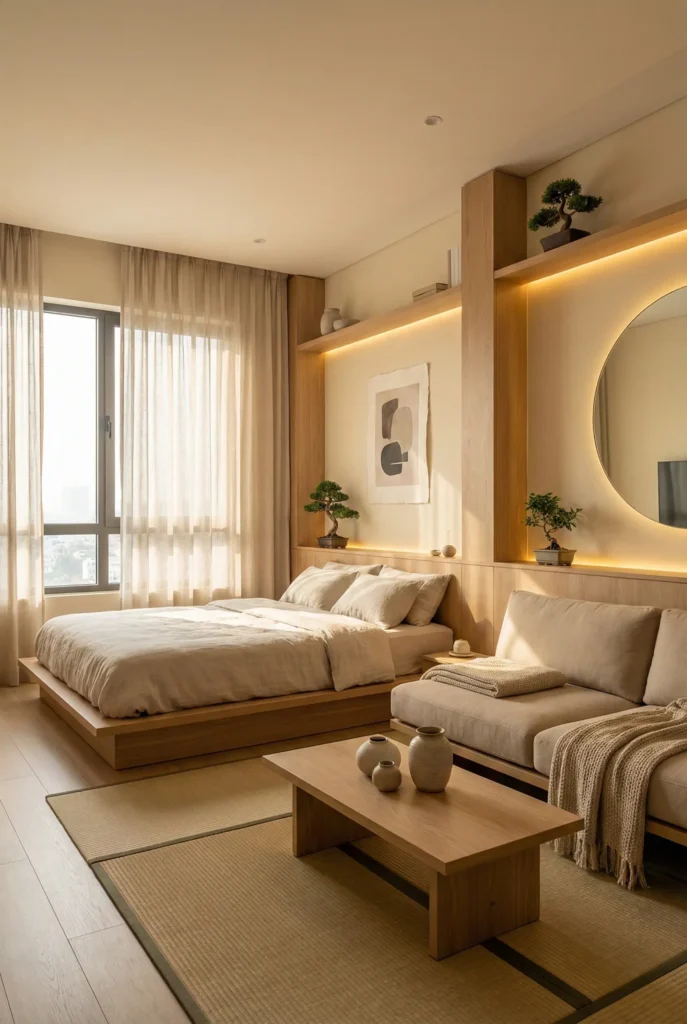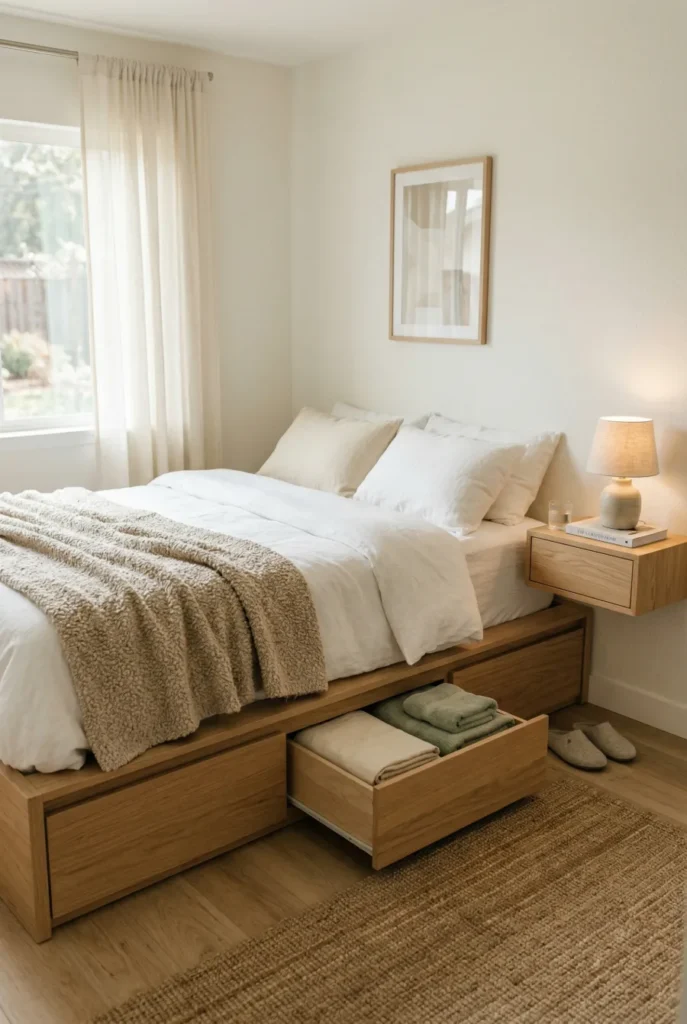
Small living rooms present a unique design challenge that requires creativity, strategic planning, and smart furniture choices. When square footage is limited, every inch counts, and the difference between a cramped, cluttered space and a functional, beautiful room often comes down to how well you maximize your available space. The good news is that compact living doesn’t mean compromising on style or comfort. With the right space-saving solutions, even the tiniest living room can feel open, organized, and genuinely inviting.
These 15 space-saving ideas prove that thoughtful design can transform small living rooms into highly functional spaces that look like they were custom built for your exact needs. From hidden storage solutions to multi-purpose furniture, these strategies will help you make the most of every square foot while creating a home that feels uniquely yours.
1. Built-In Wall Storage That Does Double Duty
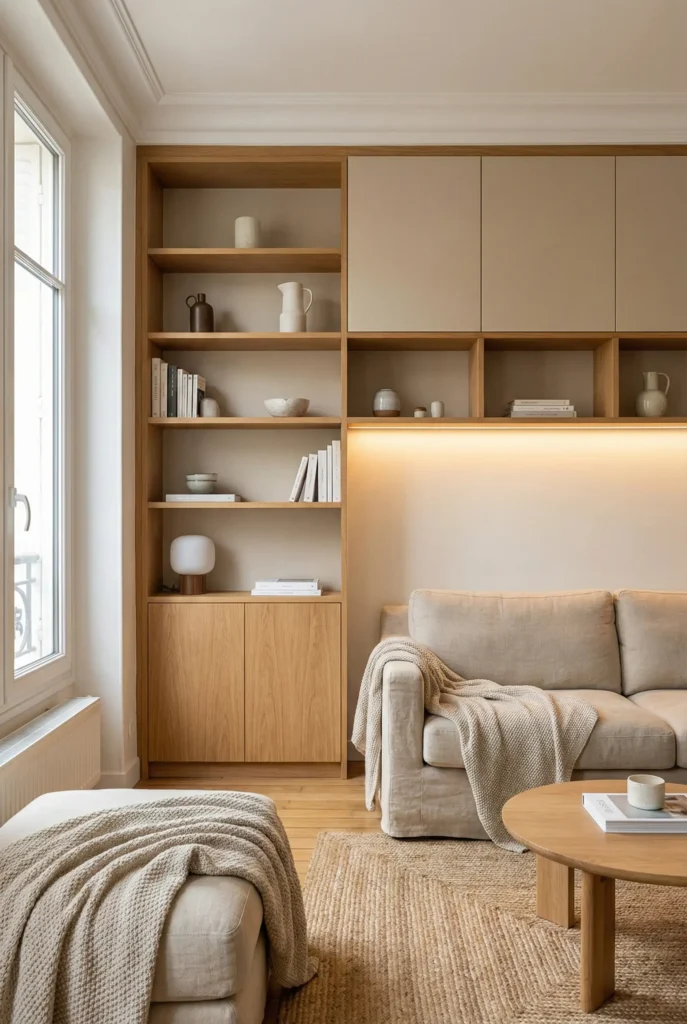
Custom built-in shelving represents one of the most effective ways to maximize storage in small living rooms without sacrificing floor space. Unlike freestanding furniture that juts into your room, built-ins sit flush against the wall and utilize vertical space that would otherwise go unused. The key to making built-ins work in small spaces is creating a balanced mix of open shelving and closed cabinets.
Open shelves allow you to display decorative items, books, and personal treasures while keeping the space feeling light and airy. Closed cabinets below provide essential hidden storage for items you need but don’t want on display, like electronics, paperwork, games, or seasonal decorations. This combination keeps clutter at bay while maintaining visual interest.
The warmth of natural wood tones in oak, walnut, or maple brings organic texture to small spaces without overwhelming them. Light wood finishes particularly excel in compact rooms because they reflect light and create an expansive feel. Pairing wood shelving with neutral wall colors in cream, beige, or soft gray establishes a cohesive backdrop that makes the room feel larger.
Strategic lighting transforms built-in shelving from purely functional to genuinely beautiful. LED strip lighting installed along the back edge of shelves creates a soft glow that highlights your displayed items while adding ambient lighting to the room. This subtle illumination makes the space feel warmer and more inviting, especially during evening hours when natural light fades.
When planning built-in storage, consider the specific items you need to store and design compartments accordingly. Taller sections work well for books and decorative vases, while shorter cubbies suit smaller objects. Including a mix of shelf depths adds visual variety and accommodates items of different sizes.
2. Hidden Storage Ottoman Ideas for Small Living Rooms
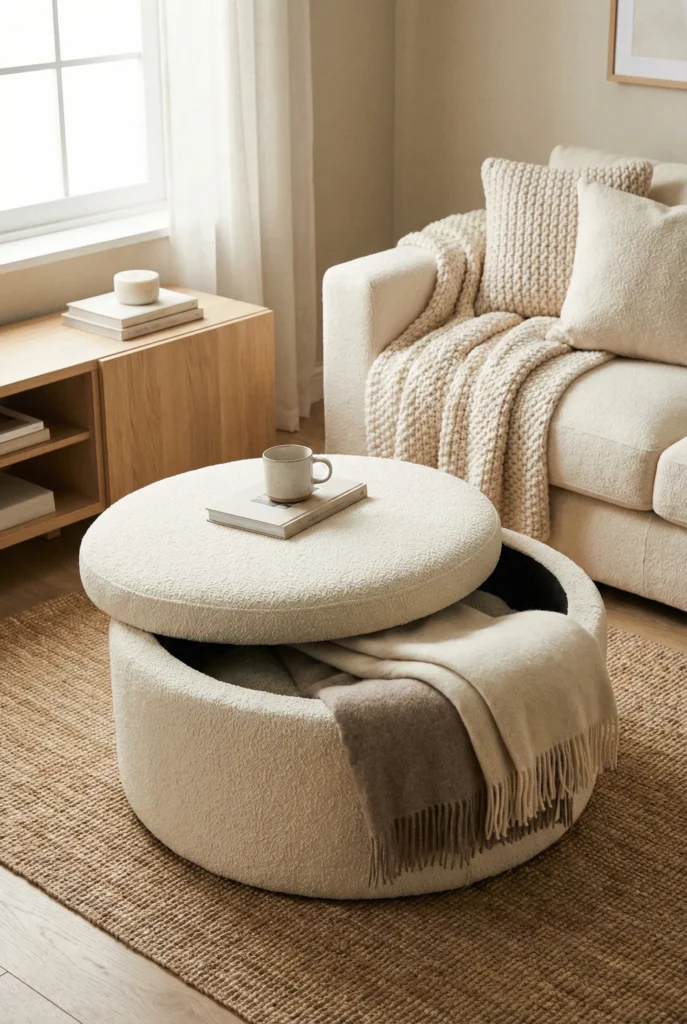
Storage ottomans represent some of the hardest working furniture pieces in small living rooms. These versatile pieces serve triple duty as seating, footrests, and concealed storage, making them essential for compact spaces where every piece must earn its place.
The beauty of storage ottomans lies in their hidden nature. From the outside, they look like stylish accent pieces that complement your decor. Lift the top, however, and you discover generous storage compartments perfect for stashing throw blankets, extra pillows, magazines, remote controls, or children’s toys. This hidden storage keeps your living room looking tidy while ensuring frequently used items remain easily accessible.
Round ottomans work particularly well in small living rooms because their curved shape eliminates sharp corners that can catch on shins or block pathways. The circular form also creates better traffic flow in tight spaces, allowing people to move around more easily. Plus, round ottomans can be positioned in corners or against walls without looking awkward, unlike rectangular pieces that need specific placement.
Texture plays an important role in making storage ottomans feel intentional rather than utilitarian. Look for pieces upholstered in tactile fabrics like boucle, chenille, or linen in neutral tones of cream, beige, ivory, or soft gray. These materials add visual and physical warmth to your space while maintaining the calm, cohesive aesthetic that makes small rooms feel larger.
Consider size carefully when selecting a storage ottoman for your small living room. While you want adequate storage capacity, an oversized ottoman can overwhelm the space. Measure your available area and choose a piece that provides storage without dominating the room or impeding movement.
3. Floating TV Units with Hidden Storage for Tiny Spaces
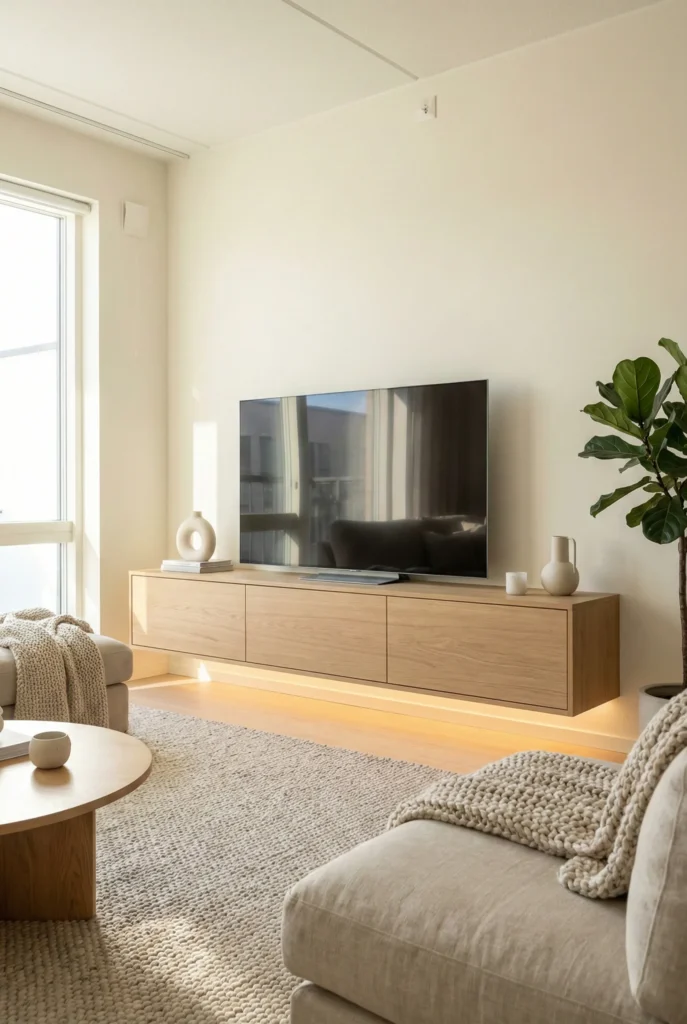
Wall-mounted TV consoles revolutionize small living room design by freeing up valuable floor space while providing essential media storage. These floating units create an airy, modern aesthetic that makes rooms feel more spacious than traditional floor-standing entertainment centers ever could.
The visual impact of floating furniture cannot be overstated in small spaces. When furniture hovers above the floor, your eye can see the continuous floor plane underneath, which tricks your brain into perceiving more space. This floating effect is particularly powerful with TV units because they typically occupy prominent wall space in living rooms.
Modern floating TV consoles incorporate clever storage solutions within their streamlined profiles. Drawers with soft-close mechanisms hide cables, remotes, gaming controllers, and media devices behind clean facades. Some designs include open shelving sections for displaying decorative items or housing sound systems, creating visual balance between concealment and display.
LED underlighting takes floating TV units from functional to fabulous. Installing LED strips along the bottom edge creates a soft glow that visually separates the unit from the wall while adding ambient lighting to your room. This backlighting effect makes the piece appear to hover even more dramatically while contributing to your overall lighting scheme. Choose warm white LED bulbs to maintain a cozy atmosphere.
Material choice matters significantly for floating TV units in small spaces. Light wood finishes in oak or ash keep the look natural and warm without adding visual weight. Alternatively, matte white or light gray lacquered finishes create a sleek, contemporary appearance that reflects light beautifully.
Installation quality is crucial for floating TV units since they must safely support your television and stored items without floor support. Professional installation ensures proper wall anchoring and weight distribution for both safety and longevity.
4. Slim Vertical Shelving Ideas for Small Living Rooms
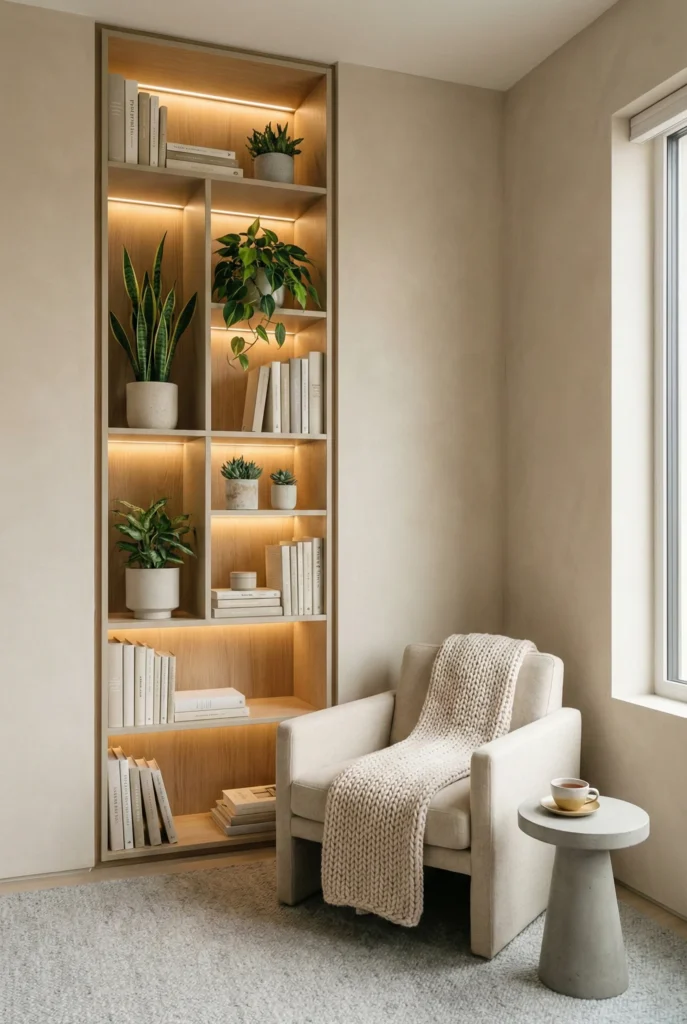
When floor space is at a premium, the solution is to build upward. Tall, narrow shelving units capitalize on vertical space that often goes unused in small living rooms, providing substantial storage capacity within a minimal footprint.
Vertical shelving draws the eye upward, which creates the illusion of higher ceilings and more expansive space. This visual trick is particularly valuable in small rooms where you want to counteract the potentially closed-in feeling that limited square footage can create. By emphasizing height over width, you shift focus away from the room’s compact dimensions.
Built-in vertical shelves offer the most custom appearance because they can be designed to fit perfectly within alcoves, corners, or awkward spaces that standard furniture cannot accommodate. These tailored solutions maximize every inch of available wall space while appearing seamlessly integrated with your home’s architecture.
The arrangement of items on vertical shelves matters tremendously in small spaces. Vary the heights and types of objects you display to create visual rhythm that keeps the eye moving. Mix books with decorative vases, small plants, and sculptural objects. Leave some shelves less densely packed to prevent the overwhelming feeling that can come from too much visual information in a small space.
Integrated lighting transforms vertical shelving from simple storage into an architectural feature. LED strips installed along the back edge of each shelf create dramatic highlighting that showcases your displayed items while adding layers of light to your room. This lighting also makes shelving feel less heavy and more ethereal, which benefits small spaces.
Wood-backed vertical shelves in light oak or birch provide warmth and texture against painted walls. The natural grain adds organic interest without the busy-ness that bold patterns might introduce. This grounding element brings balance to small rooms that might otherwise feel too minimal or sterile.
5. Sofas with Built-In Storage That Maximize Every Inch
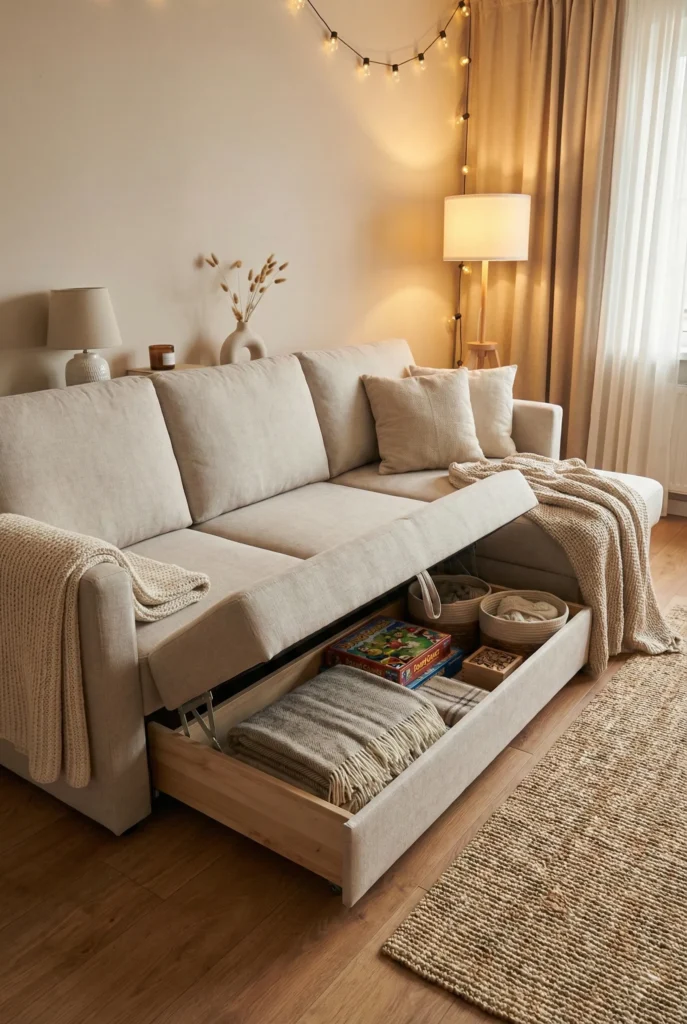
Multi-functional furniture represents the cornerstone of successful small space living, and sofas with integrated storage exemplify this principle perfectly. These clever designs hide substantial storage compartments within the sofa frame, turning what would be wasted space into valuable organization opportunities.
Pull-out drawers located beneath sofa seats provide surprisingly generous storage capacity. These compartments work beautifully for items you want accessible but not visible, including extra throw blankets for chilly evenings, board games for family entertainment, photo albums, or seasonal decorations waiting for their moment. The hidden nature of these drawers maintains the clean aesthetic essential in small living rooms while keeping useful items close at hand.
Some storage sofas feature lift-up seat cushions that reveal deep storage wells perfect for larger items like spare bedding, out-of-season throw pillows, or bulky items that lack obvious homes elsewhere in your apartment. This type of storage works particularly well for items you access less frequently since retrieving them requires removing seat cushions.
Design aesthetics remain crucial even when prioritizing function. Look for storage sofas upholstered in durable, neutral fabrics that coordinate with your existing decor. Linen and cotton blends in cream, beige, light gray, or soft taupe create a calm, cohesive foundation that makes small rooms feel serene rather than chaotic. Avoid bold patterns or dark colors that can visually shrink already compact spaces.
The sofa profile matters in small living rooms. Low-backed designs with clean lines create less visual bulk than tall, heavily cushioned pieces. Raised legs, even just a few inches, allow light to flow underneath and maintain that crucial sense of openness that makes small spaces feel larger.
6. Fold-Down Wall Desks for Small Living Room Layouts
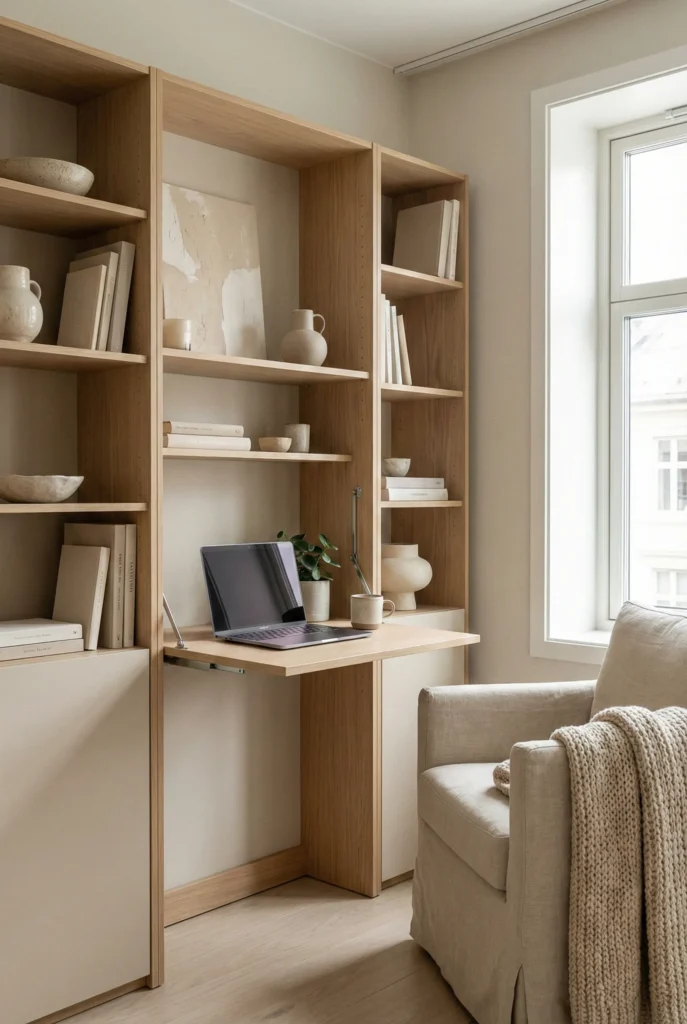
The rise of remote work has created new challenges in small living spaces where dedicated home offices simply don’t exist. Fold-down wall desks solve this problem elegantly by providing functional workspace when needed while disappearing completely when work hours end.
Wall-mounted fold-down desks integrate beautifully into shelving units, creating cohesive storage and workspace solutions that look intentional rather than improvised. When folded up, the desk becomes virtually invisible, blending seamlessly with surrounding shelves. When lowered, it provides a stable work surface suitable for laptops, paperwork, or creative projects.
The surrounding shelves serve dual purposes in these configurations. During work hours, they hold office supplies, reference books, and work-related items within easy reach. When the desk folds away, they simply display decorative objects, plants, and personal items like any other shelving unit. This flexibility allows your living room to transform between work mode and relaxation mode without requiring furniture rearrangement.
Strategic placement near windows maximizes natural light for your workspace, which benefits both productivity and mood during work hours. Natural light also reduces the need for additional task lighting, keeping the setup simple and uncluttered.
Material consistency between the fold-down desk and surrounding shelving creates visual harmony essential in small spaces. Matching wood tones in oak, maple, or walnut maintain a cohesive appearance whether the desk is deployed or stowed. This attention to aesthetic detail ensures your space looks intentionally designed rather than cobbled together from mismatched pieces.
7. Window Bench Storage Ideas for Small Living Rooms
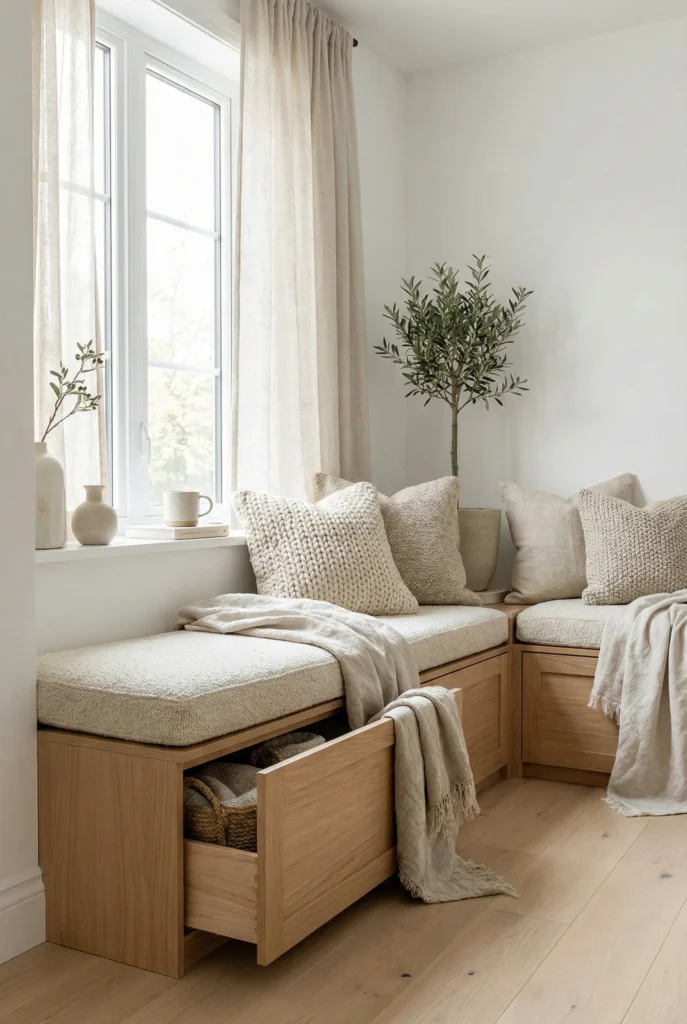
Window areas often represent underutilized real estate in small living rooms. Building a window seat with integrated storage transforms this dead space into a functional, beautiful feature that serves multiple purposes while adding character to your home.
Built-in window benches create additional seating without requiring floor space that freestanding chairs would demand. This built-in approach feels permanent and intentional, like a custom feature that came with the home. The seating sits at the perfect height for conversation, reading, or simply enjoying the view outside your window.
The storage beneath window benches typically comes in two forms: lift-up seats that reveal large storage wells, or pull-out drawers that slide forward for access. Lift-up storage works well for bulky items like extra bedding, seasonal pillows, or beach towels. Pull-out drawers offer easier access and work better for items you retrieve more frequently.
Comfortable cushioning transforms window benches from simple storage boxes into genuinely inviting seating areas. Upholstered cushions in durable, neutral fabrics coordinate with your room’s color palette while providing comfort. Boucle, linen, or cotton fabrics in cream, beige, or soft gray work particularly well because they’re both practical and beautiful.
Styling window benches with throw pillows and draped blankets makes them look more like intentional design features than storage solutions. Mix textured pillows in coordinating neutral tones to add visual interest while maintaining the calm aesthetic that benefits small spaces. A chunky knit throw casually draped across one corner adds warmth and invitation.
The natural light flooding in from the window makes this spot feel special and separate from the rest of the room, creating a small retreat within your living space. This psychological separation is valuable in small homes where distinct zones help spaces feel less one-dimensional.
8. Nesting Coffee Tables That Save Space Instantly
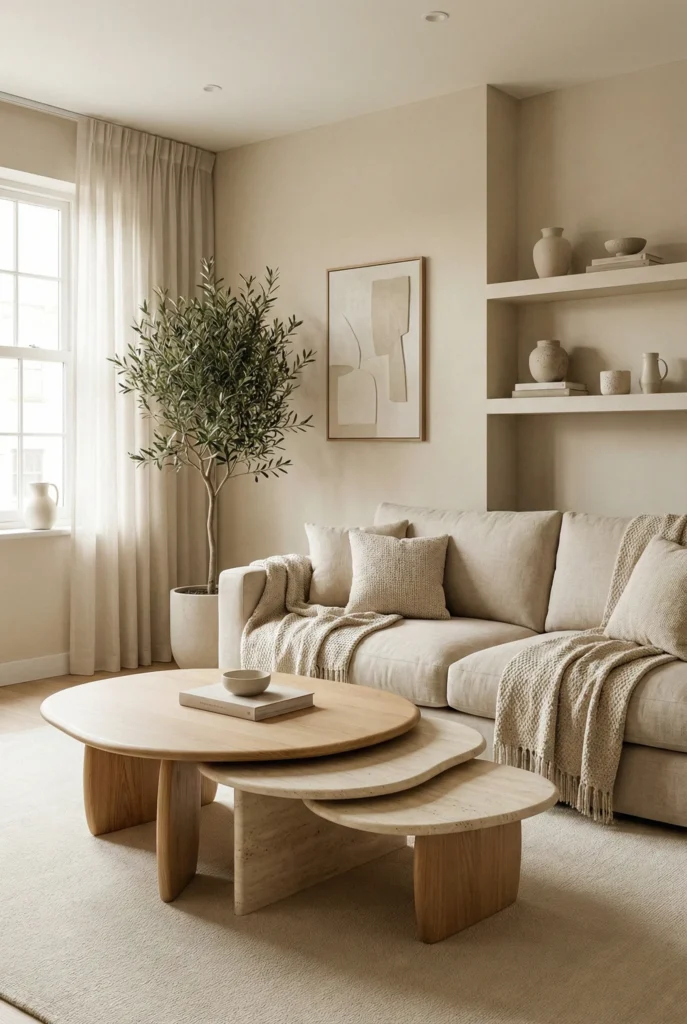
Nesting tables represent brilliant space-saving solutions because they provide flexible surface area that expands for entertaining and contracts for everyday living. These sets typically include two or three tables in graduated sizes that stack together when not in use.
The beauty of nesting tables lies in their adaptability. When you’re hosting guests, pull all tables out to create multiple surface areas for drinks, snacks, or decorative displays. During normal daily life, push the smaller tables underneath the largest to minimize the furniture footprint in your living room. This flexibility allows your space to transform based on your current needs.
Round or oval nesting tables work particularly well in small living rooms because curved edges create better traffic flow than sharp corners. The organic shapes also soften the geometry of rectangular rooms, adding visual variety that makes spaces feel more dynamic and interesting.
Material and finish selection impacts how nesting tables affect your room’s perceived size. Light wood tones in oak, ash, or maple maintain an airy feel that prevents these pieces from visually overwhelming small spaces. The natural wood grain adds organic texture and warmth without the busy-ness that patterned surfaces might introduce.
The sculptural quality of well-designed nesting tables turns them into focal points rather than just functional pieces. Look for sets with interesting leg designs or unique joinery details that make them worth displaying even when nested together. This artistic element elevates your living room beyond purely practical furniture to curated design.
Scale matters when selecting nesting tables for small living rooms. While you want adequate surface area when tables are separated, oversized pieces defeat the space-saving purpose. Measure your available space carefully and choose sets that provide function without domination.
9. Hidden Storage Walls with Sliding Panels
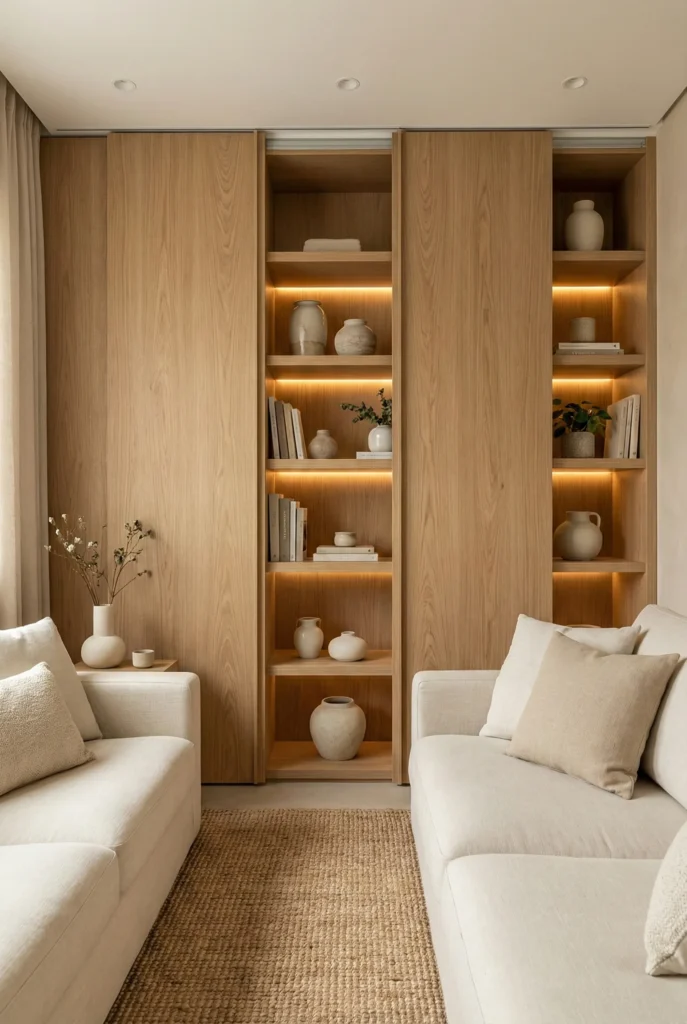
Floor-to-ceiling storage walls with sliding panel doors represent the ultimate space-saving solution for small living rooms. These impressive installations provide massive storage capacity while maintaining sleek, minimalist aesthetics that prevent visual clutter.
The genius of sliding panel systems lies in their ability to conceal extensive storage behind clean, uninterrupted facades. When closed, the panels create a smooth wall surface that doesn’t advertise its storage function. This visual simplicity is crucial in small spaces where too much visual information can make rooms feel chaotic and cramped.
Behind the sliding panels, you can create customized storage zones for different purposes. One section might house a complete home bar with glass shelves, wine storage, and space for bottles and barware. Another section could contain office supplies, electronics, or entertainment equipment. A third might hold seasonal items, extra linens, or household supplies. This organizational flexibility allows you to design storage that matches your specific lifestyle needs.
The sliding mechanism itself contributes to the space-saving functionality. Unlike hinged doors that require clearance to swing open, sliding panels move along the wall plane, never extending into your living space. This makes them ideal for tight quarters where every inch of floor space matters.
Integrated LED lighting within storage sections ensures you can see contents clearly when panels open while adding dramatic highlighting to displayed items if you choose to leave sections exposed. Warm LED strips create a welcoming glow that makes the storage wall feel like an intentional design feature rather than purely utilitarian addition.
Material choices affect the overall aesthetic significantly. Light wood panels in oak or birch maintain warmth while keeping the look natural and grounded. Alternatively, matte lacquered panels in soft gray, greige, or cream create contemporary elegance that works beautifully in modern small spaces.
10. Modular Cube Storage Ideas for Compact Living Rooms
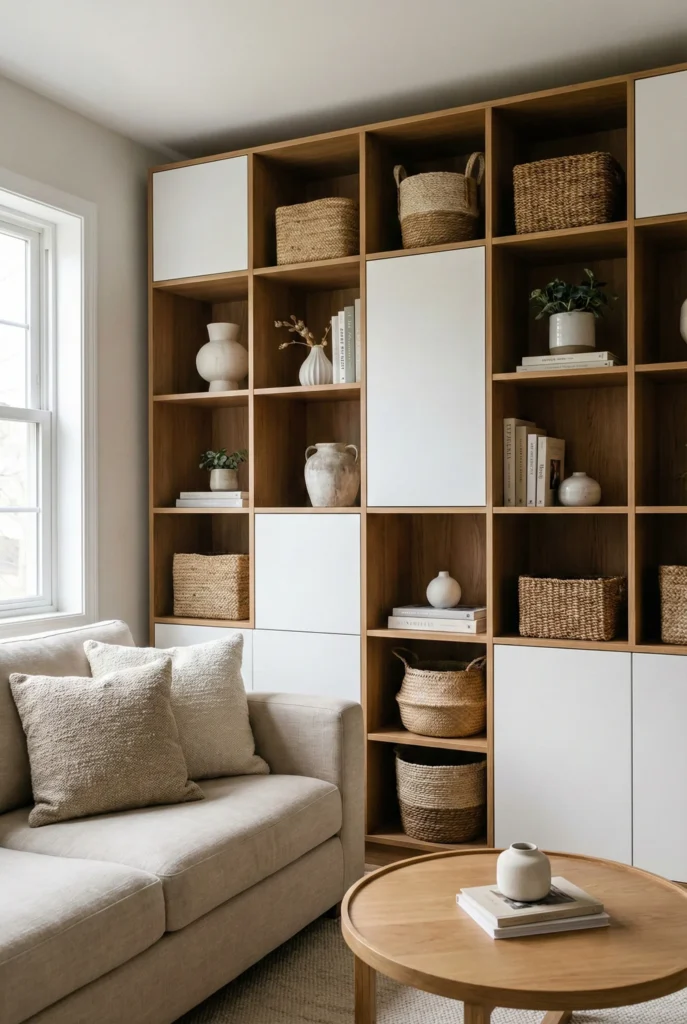
Modular cube systems offer unmatched versatility in small living rooms because they can be configured and reconfigured to meet changing needs over time. These systems typically consist of individual cube units that stack and arrange in various combinations.
The mix-and-match nature of cube storage allows you to create customized solutions that fit your exact space and storage needs. Combine open cubes for displaying books, plants, and decorative objects with closed cabinet sections that hide less attractive items. This balance between display and concealment maintains visual interest while preventing clutter.
Woven baskets inserted into open cubes add texture and warmth while concealing smaller items that might create visual chaos if left exposed. Natural fiber baskets in seagrass, water hyacinth, or rattan introduce organic texture that softens the geometric precision of cube systems. These baskets also make it easy to pull out and transport items, essentially creating portable storage within your fixed system.
The modular nature means you can start with a basic configuration and add cubes as your storage needs grow or your budget allows. This flexibility is particularly valuable for people in transitional living situations or those who anticipate lifestyle changes that might affect storage requirements.
Visual continuity is important when using cube storage in small spaces. Stick with one wood tone and finish throughout to create cohesion rather than a patchwork appearance. Natural oak or white oak finishes work particularly well because they complement most color palettes while maintaining the light, airy aesthetic that benefits compact rooms.
The ability to reconfigure cube systems also allows you to refresh your space without buying new furniture. Simply rearrange the cubes, swap the contents, or change which sections have doors versus open fronts, and your living room feels updated and renewed.
11. Lift-Top Coffee Tables with Secret Storage
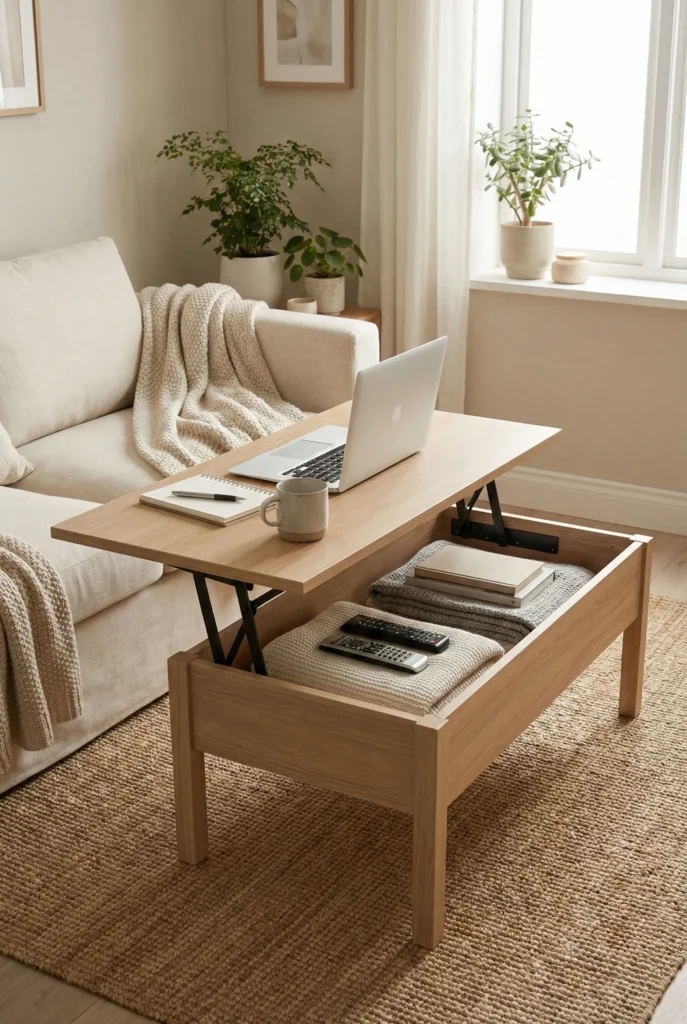
Lift-top coffee tables represent ingenious multi-functional furniture that transforms from standard coffee table to raised work surface with hidden storage underneath. These pieces are particularly valuable in small living rooms that must serve multiple purposes throughout the day.
The mechanical lift mechanism raises the table top and extends it toward you, creating an ergonomic surface perfect for working on a laptop, eating meals, or pursuing hobbies. This adjustable height brings the surface closer to couch-seat level, which is far more comfortable than hunching over a traditional low coffee table. When you finish working or eating, the top lowers back to standard coffee table height.
The hidden storage compartment beneath the lift-top provides a convenient place to stash remote controls, magazines, coasters, and other living room essentials. This concealed storage keeps your table top clear and uncluttered while ensuring frequently used items remain accessible. Some designs include additional shelving or drawers along the sides for even more storage capacity.
The dual functionality makes lift-top coffee tables especially valuable for people who work from home but lack dedicated office space. Your living room can easily transition from workspace during business hours to relaxation zone in the evening without requiring furniture rearrangement or setup time.
Design aesthetics remain important even with highly functional pieces. Look for lift-top tables in light wood finishes that coordinate with your existing furniture. Clean lines and minimal hardware maintain a streamlined appearance that doesn’t add visual clutter to small spaces. Some designs conceal the lift mechanism completely when lowered, making the piece indistinguishable from traditional coffee tables when not in use.
Size and proportion matter in small living rooms. Measure your available space carefully to ensure the table fits comfortably without overwhelming the room or impeding traffic flow. Consider both the footprint when closed and the space required when the top is lifted and extended.
12. Floating Bookshelves Above Sofa Space Hacks
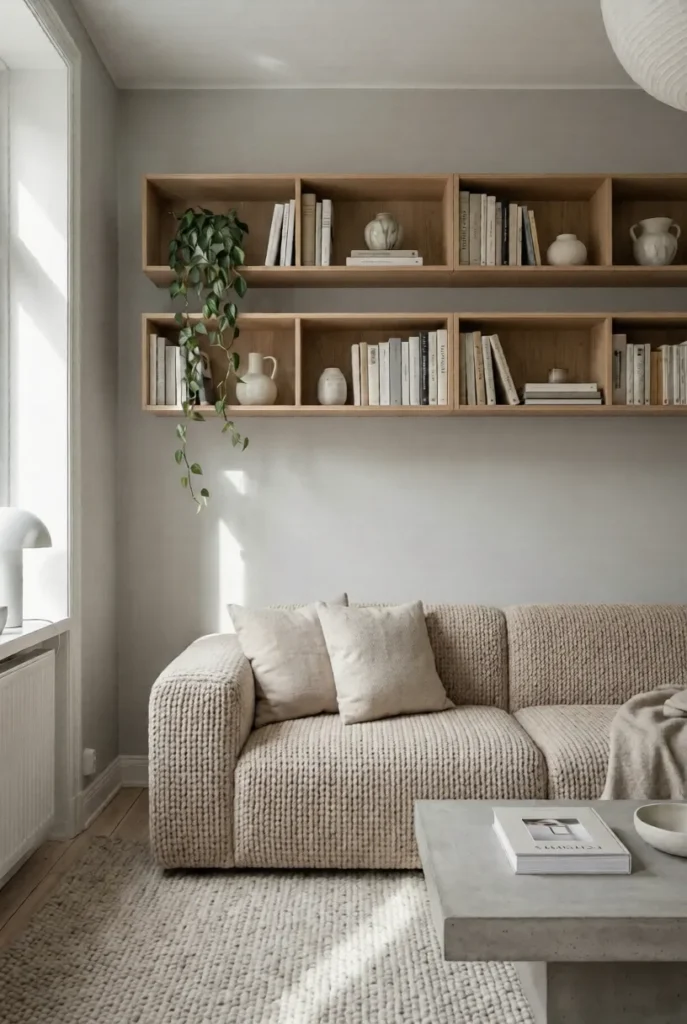
The wall space above your sofa represents prime storage real estate that often goes completely unused. Installing floating box shelves in this location creates practical storage and display space without consuming any floor area.
Horizontal arrangements of floating shelves create clean, linear displays that complement the horizontal lines of your sofa below. This design harmony creates visual cohesion that makes small spaces feel more organized and intentional. The eye-level placement also means displayed items are easily visible and accessible without reaching up high.
Floating shelves appear to hover against the wall with no visible brackets or supports, creating a clean, modern aesthetic perfect for small spaces where visual simplicity prevents rooms from feeling cluttered. The minimal profile adds storage without adding bulk, which is crucial when every design decision affects how spacious your room feels.
The items you display on floating shelves contribute significantly to your room’s overall appearance. Curate your display thoughtfully, including books arranged both vertically and horizontally, small plants that add organic life, sculptural objects that provide visual interest, and personal items that reflect your personality. Leave some negative space between groupings to prevent the overwhelming feeling that comes from over-crowded shelves.
Wood shelves in light oak, maple, or birch add natural warmth and texture against painted walls. The wood grain provides subtle pattern and visual interest without the bold statement that might overwhelm small rooms. Coordinate the wood tone with other furniture pieces in your room for a cohesive appearance.
Installation height matters for both aesthetics and function. Position shelves high enough that you don’t bump your head when sitting on the sofa, but low enough that you can easily reach items. Generally, the bottom shelf should sit about 8 to 12 inches above your sofa back.
13. Hidden Bar Cabinets for Small Living Rooms
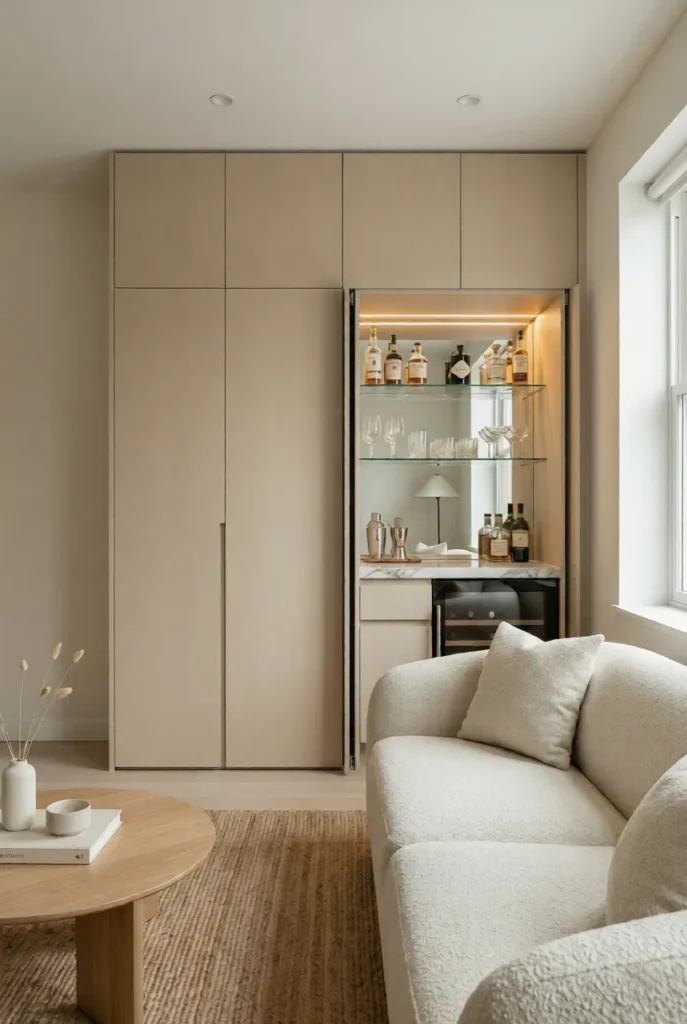
A concealed bar cabinet built into larger storage walls allows you to keep entertaining essentials organized and accessible without dedicating permanent space to barware and bottles. This hidden approach works beautifully in small living rooms where every visible element affects how spacious the room feels.
Behind closed doors, you can create a complete bar setup with glass shelves for displaying bottles and glassware, wine storage racks, and even small refrigeration units for keeping beverages chilled. LED strip lighting installed along the top and back edges highlights your collection while making it easy to see contents when accessing the cabinet.
The key advantage of hidden bar cabinets is their disappearing act. When doors close, the cabinet blends seamlessly with surrounding storage, maintaining the clean lines and minimal aesthetic essential in small spaces. Guests would never know your entertainment bar exists unless you choose to reveal it.
This concealment also protects bottles and glassware from dust and damage while keeping them out of sight when not entertaining. The psychological benefit of hidden storage shouldn’t be underestimated; knowing that less attractive necessities are concealed behind closed doors makes spaces feel calmer and more serene.
Material consistency between bar cabinet doors and surrounding storage maintains visual unity. Matching wood tones, finishes, and hardware create the seamless integration that makes hidden features truly disappear when closed. This attention to detail separates thoughtful design from obvious add-ons.
14. Slim Ladder Shelves for Small Space Styling
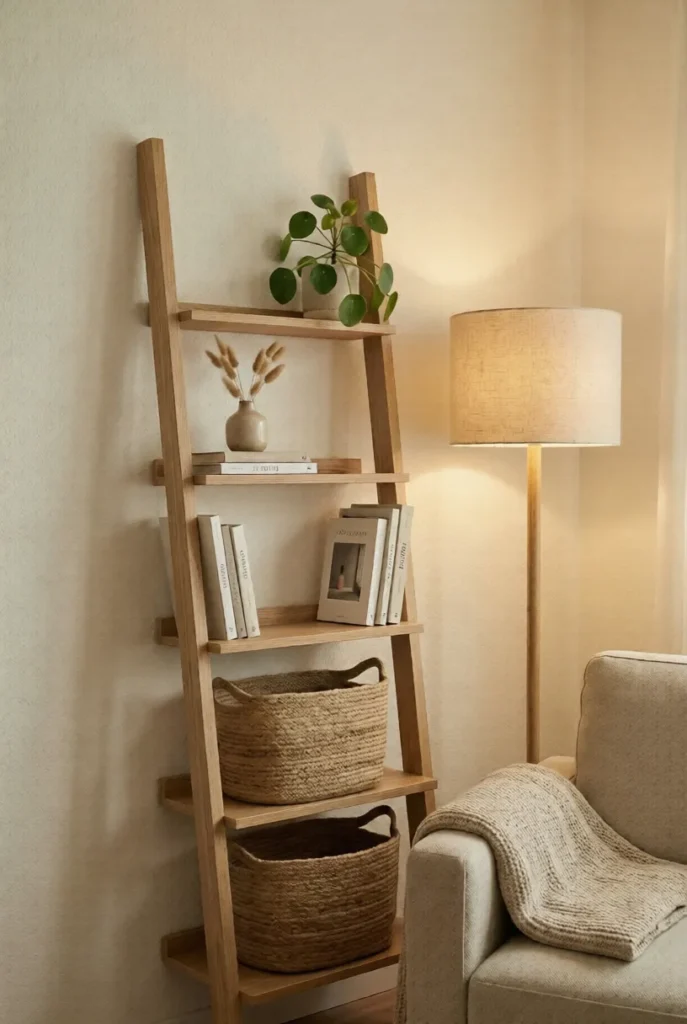
Leaning ladder shelves occupy minimal floor space while providing multiple tiers of storage and display area. The angled design creates visual interest and makes these pieces feel lighter and less imposing than traditional bookcases of similar height.
The narrow footprint of ladder shelves makes them perfect for tight corners, narrow wall sections, or spaces beside furniture where traditional shelving units wouldn’t fit. This ability to utilize otherwise wasted space is particularly valuable in small living rooms where you’re constantly seeking creative storage solutions.
The open design of ladder shelves allows light and sight lines to pass through, which helps maintain the sense of openness crucial in small spaces. Solid bookcases create visual barriers that can make rooms feel more closed in, while ladder shelves feel transparent and airy.
Styling ladder shelves requires thoughtful curation since the open design means everything is visible. Each shelf becomes a small vignette that contributes to your room’s overall aesthetic. Combine books with small plants in ceramic pots, decorative objects, and woven baskets that add texture while concealing smaller items.
Natural wood ladder shelves in light oak or ash finishes bring organic warmth to small living rooms without visual heaviness. The wood grain adds subtle pattern and interest while maintaining the neutral palette that makes small spaces feel larger and more cohesive.
The leaning design means ladder shelves must be secured to walls for safety, especially in homes with children or pets. This stability also prevents the piece from shifting over time as items are added or removed from shelves.
15. Room Divider Shelving Ideas for Studio Living Rooms
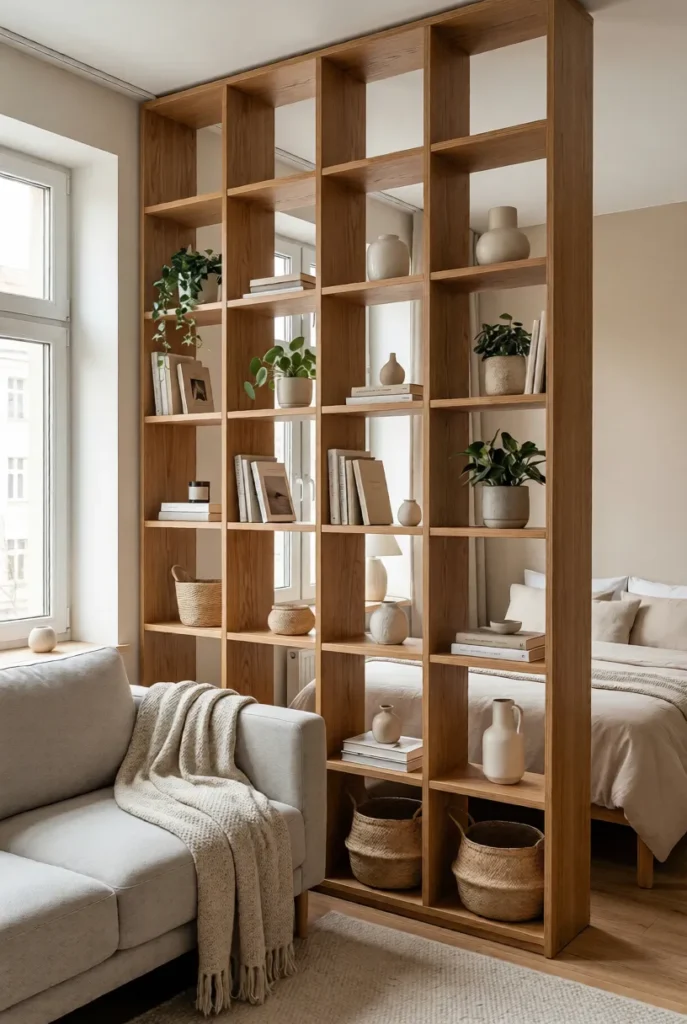
Studio apartments and open-plan living spaces benefit tremendously from room divider shelving that creates distinct zones without blocking light or building walls. These freestanding units define separate areas for living, sleeping, or working while providing substantial storage capacity.
The beauty of shelving room dividers lies in their transparency. Unlike solid walls or heavy curtains that completely separate spaces, open shelving creates visual and physical division while maintaining sight lines and light flow. This preserves the airy, open feeling that makes small spaces feel less claustrophobic.
Both sides of room divider shelving can be utilized for storage and display, essentially doubling the functionality. The living room side might display books, decorative objects, and plants, while the bedroom side holds alarm clocks, reading materials, or personal items. This dual-sided access maximizes the piece’s utility.
The height of room divider shelving affects how separate the zones feel. Taller units create more complete division and privacy, while shorter pieces maintain better visual connection between areas. Consider your specific needs when selecting height; those who work from home might want more complete separation between work and relaxation zones, while others might prefer maintaining visual openness.
Styling room divider shelving requires balance since both sides will be visible from different areas of your home. Create cohesive displays that look intentional from all angles. Mix items of varying heights and depths to prevent the see-through effect from creating visual confusion.
Wood grid shelving in natural oak or walnut finishes provides substantial presence while maintaining the light, airy aesthetic essential in small spaces. The natural material brings warmth and grounds the space, preventing the potentially cold feeling that can come from too much modern minimalism.
Creating Your Perfect Small Living Room
Small living room design succeeds when you approach it strategically rather than apologetically. Instead of viewing limited square footage as a disadvantage to overcome, embrace it as an opportunity to create highly curated, intentional spaces where every element serves a purpose and contributes to the overall aesthetic.
The space-saving ideas presented here share common threads that make them effective: they maximize vertical space, incorporate hidden storage, serve multiple functions, and maintain visual simplicity that prevents small rooms from feeling cluttered or chaotic. When you select furniture and storage solutions that embody these principles, your small living room can feel spacious, organized, and genuinely beautiful.
Remember that successful small space design is personal and evolving. What works perfectly for one person might not suit another’s lifestyle or aesthetic preferences. Use these ideas as starting points and adapt them to your specific needs, space constraints, and design sensibilities. The goal isn’t to copy these solutions exactly, but to understand the principles they demonstrate and apply those concepts creatively in your own home.
Small living rooms have unique charm that larger spaces often lack. They encourage coziness, intimacy, and intentionality that makes homes feel genuinely lived in and loved. By implementing thoughtful space-saving solutions, you create rooms that work beautifully for your daily life while looking like they were custom designed just for you.
📌 Affiliate Disclosure: This post contains affiliate links. If you purchase through these links, we may earn a small commission at no extra cost to you. Learn more.
🛒 Shop This Look
These are our top picks for creating a smart, space-saving living room — the exact types of pieces featured in this guide:
📚 Floating Wall Shelves
Maximize vertical wall space with floating shelves — store books, plants, and decor without taking up floor space.
View on Amazon →🛋️ Storage Ottoman
A coffee table, extra seating, AND hidden storage in one — the ultimate small living room multitasker.
View on Amazon →🪞 Large Wall Mirror
Instantly make your living room feel twice as large — a floor mirror or large wall mirror is the #1 small space hack.
View on Amazon →🌿 Slim Sofa (Under 80″)
A narrow, low-profile sofa keeps your living room feeling open and airy without sacrificing comfort.
View on Amazon →