How to Transform Your Studio Apartment on a Budget — A Complete Makeover Guide
Category: Studio Apartment Decors | Read time: 12 min
The most common misconception about interior design is that a beautiful home requires a large budget. This idea is reinforced by every interior design publication, every renovated-apartment feature, and every before-and-after content piece that reveals a transformation budget of tens of thousands of dollars. The reality is fundamentally different. The studio apartments that look genuinely beautiful — the ones that feel considered, calm, and like a real home rather than a temporary arrangement — are almost never the result of unlimited spending. They are the result of intentional decision-making: knowing what to invest in, knowing what to replace on a budget, knowing when to shop secondhand, and knowing how to style what you have in a way that makes it look curated. This guide is a complete budget studio apartment makeover framework — not a list of shortcuts, but a genuine strategy for creating a home you love without the financial pressure that most interior design content assumes is a baseline requirement.
Start With a Plan, Not a Purchase — The $500 Budget Transformation Framework
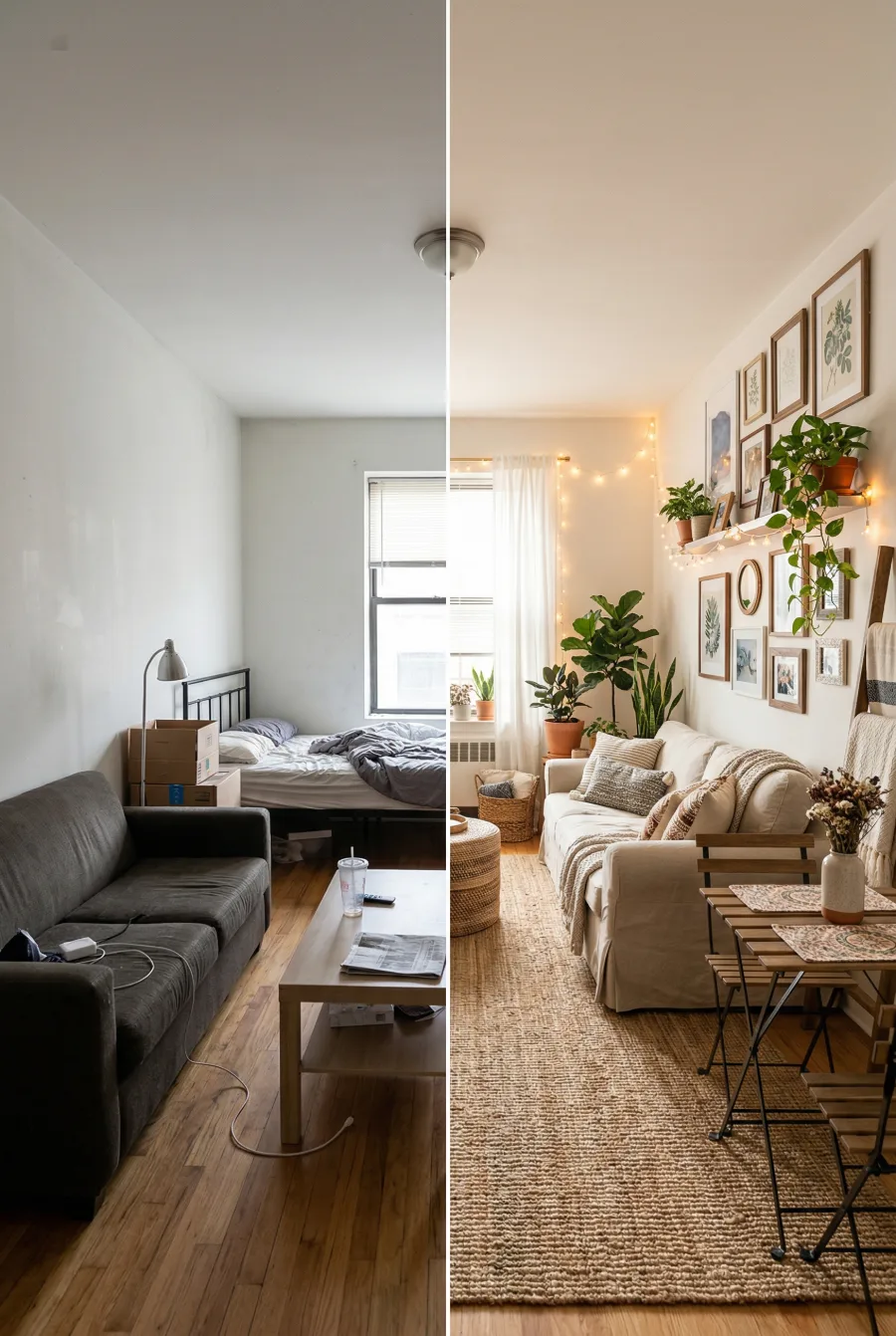
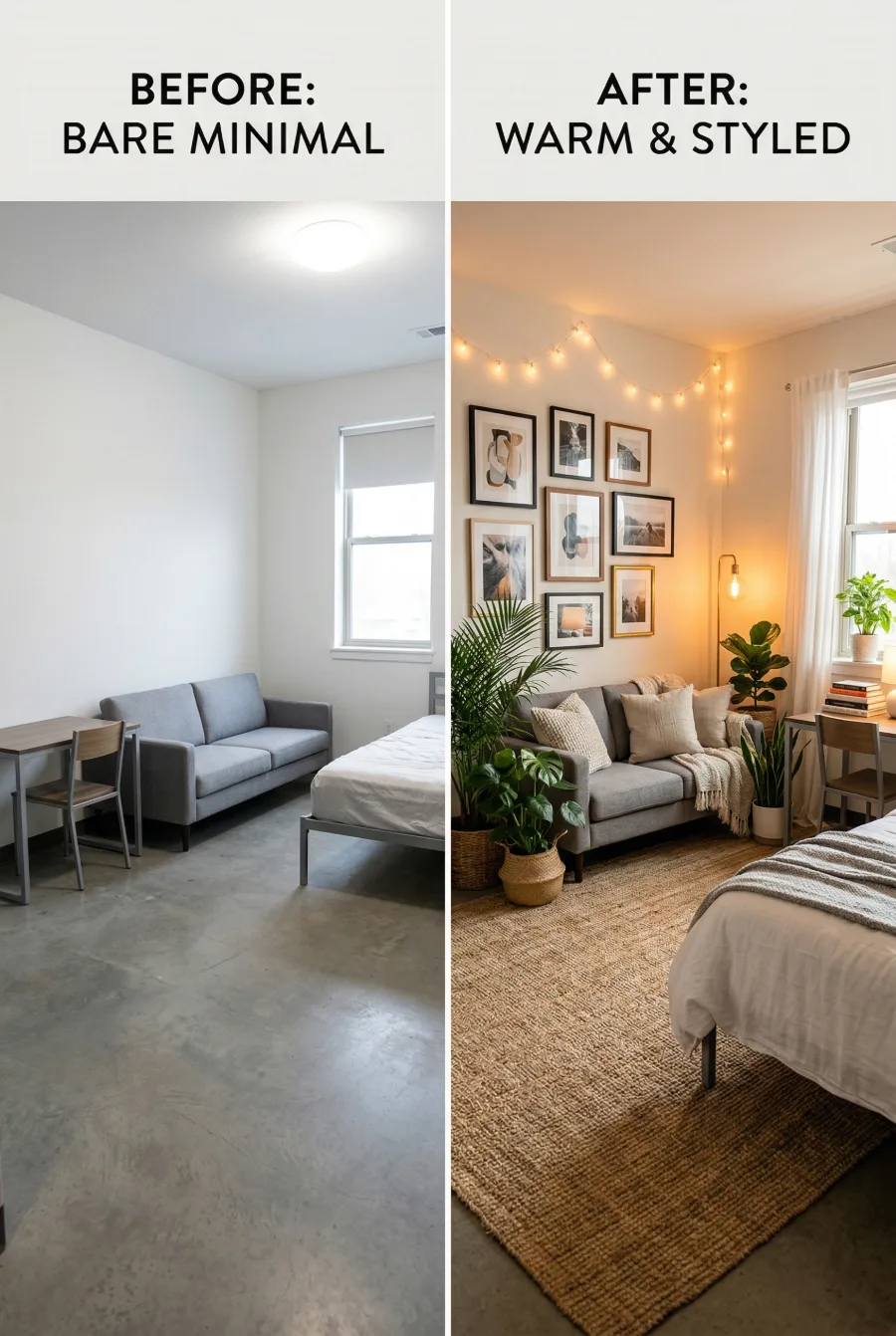
Before spending a single dollar on a studio apartment makeover, the most valuable investment of time you can make is a clear plan of what you want the space to feel like and what specific changes will get you closest to that feeling for the least money. A $500 budget applied without a plan will result in a collection of unrelated purchases that don’t create a cohesive result. The same $500 applied to five or six specifically chosen and sequenced interventions — a large rug to anchor the living zone, a set of matching frames for a gallery wall, three good-sized plants, new cushion covers for the sofa, a curtain change, and a lamp upgrade — creates a transformation that looks like it cost ten times as much because every element is working together toward the same aesthetic. The first step is identifying the two or three things that most undermine how you feel about the space. Is it the lack of a clear sleeping zone? The bare walls? The absence of warmth and texture? The cluttered kitchen counter? Solving the problems that most bother you first creates the most significant felt improvement. Aesthetic additions — art, plants, cushions — come after the structural problems are resolved.
IKEA Hacks That Make Affordable Furniture Look Custom
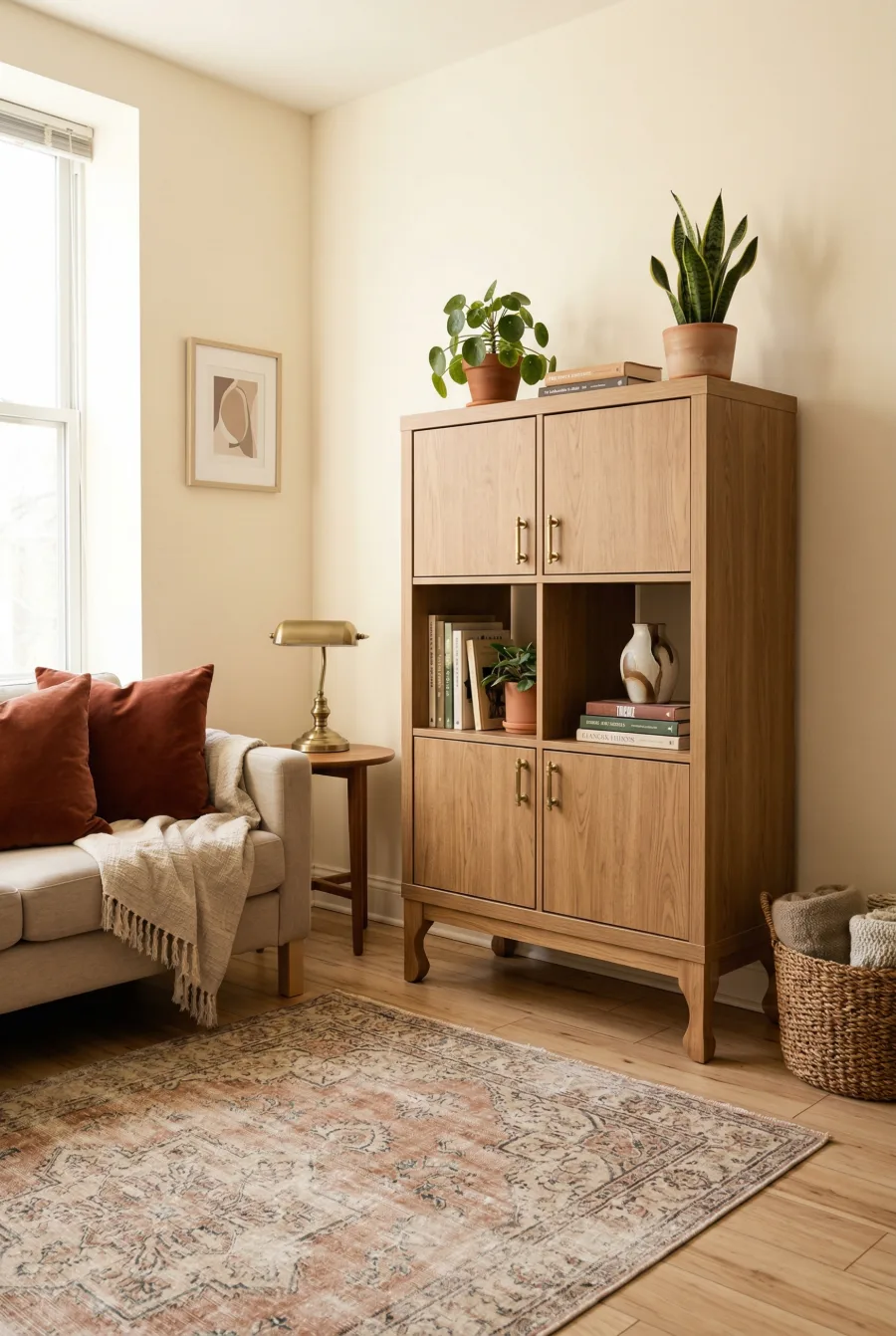
IKEA produces some of the most functional affordable furniture available, but the catalog aesthetic is immediately recognizable — and if your studio apartment looks like a showroom floor, it signals that the decoration choices were driven by budget constraints rather than personal vision. A few targeted modifications transform IKEA pieces from recognizable to genuinely custom. The most impactful IKEA hack is hardware replacement — removing the standard knobs and pulls from IKEA dressers, cabinets, and kitchen units and replacing them with brass, ceramic, or leather-strap hardware from an online hardware retailer changes the character of the piece completely for a cost of $20 to $60. A second major upgrade is contact paper or veneer applied to flat surfaces — warm oak veneer contact paper applied to a white IKEA side table or shelf unit transforms it from a generic white box into something that reads as solid wood furniture. Paint is the third tool — chalk paint in a specific color applied to an IKEA unit that was purchased in white or pine makes the piece feel intentional and coordinated with the rest of the space. For the KALLAX shelving unit specifically, adding door inserts, fabric basket drawers, and legs from the IKEA accessory range transforms it from basic shelving into a credenza that looks custom-built.
DIY Floating Shelves — The Cheapest High-Impact Bedroom Upgrade
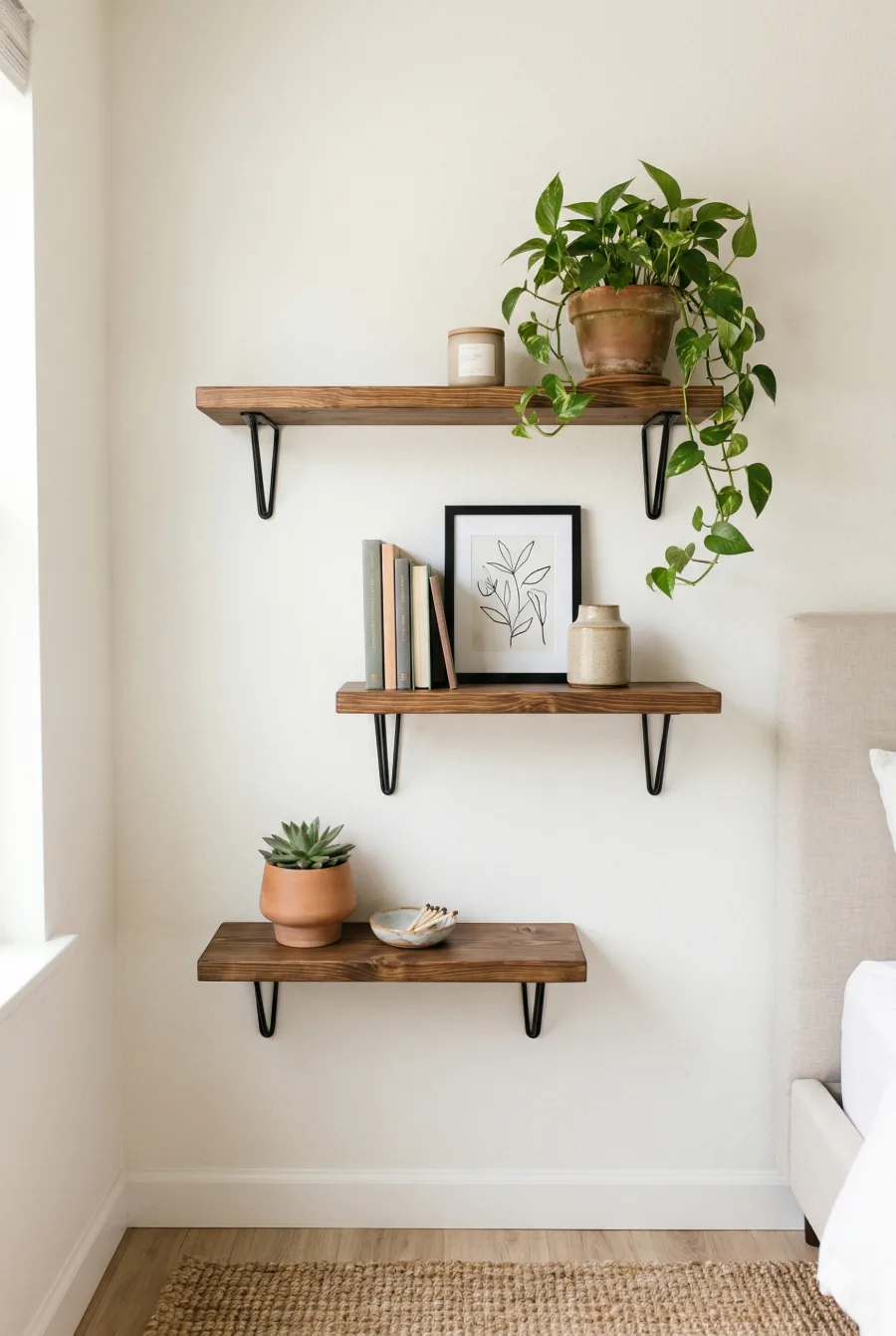
Floating shelves installed in a bedroom or living area are one of the most consistently high-impact improvements in a small apartment interior, and building them yourself reduces the cost to a fraction of buying finished shelves. The basic approach is purchasing a planed timber plank from a hardware store — pine, poplar, or oak in a thickness of 1.5 to 2 inches — cutting it to the desired length, sanding and finishing it with the wood stain or paint of your choice, and mounting it on shelf brackets chosen to match your aesthetic. The result is a shelf that looks identical to premium retail floating shelves at a fraction of the cost. The bracket choice determines the look significantly: hairpin steel brackets in matte black give a modern industrial edge; slim invisible floating brackets create the cleanest minimal look; simple L-brackets in brass or bronze read as warm and eclectic. The styling of the shelf itself is the final investment — a small plant, one framed print or postcard, a ceramic candle holder, and a small stack of books transform a bare wooden plank into a considered interior detail. Three shelves at different heights on one bedroom wall, styled carefully, eliminate the need for an expensive headboard feature — the shelving wall above the bed becomes the visual focus of the sleeping zone.
Peel and Stick Wallpaper — The Renter’s Most Powerful Upgrade
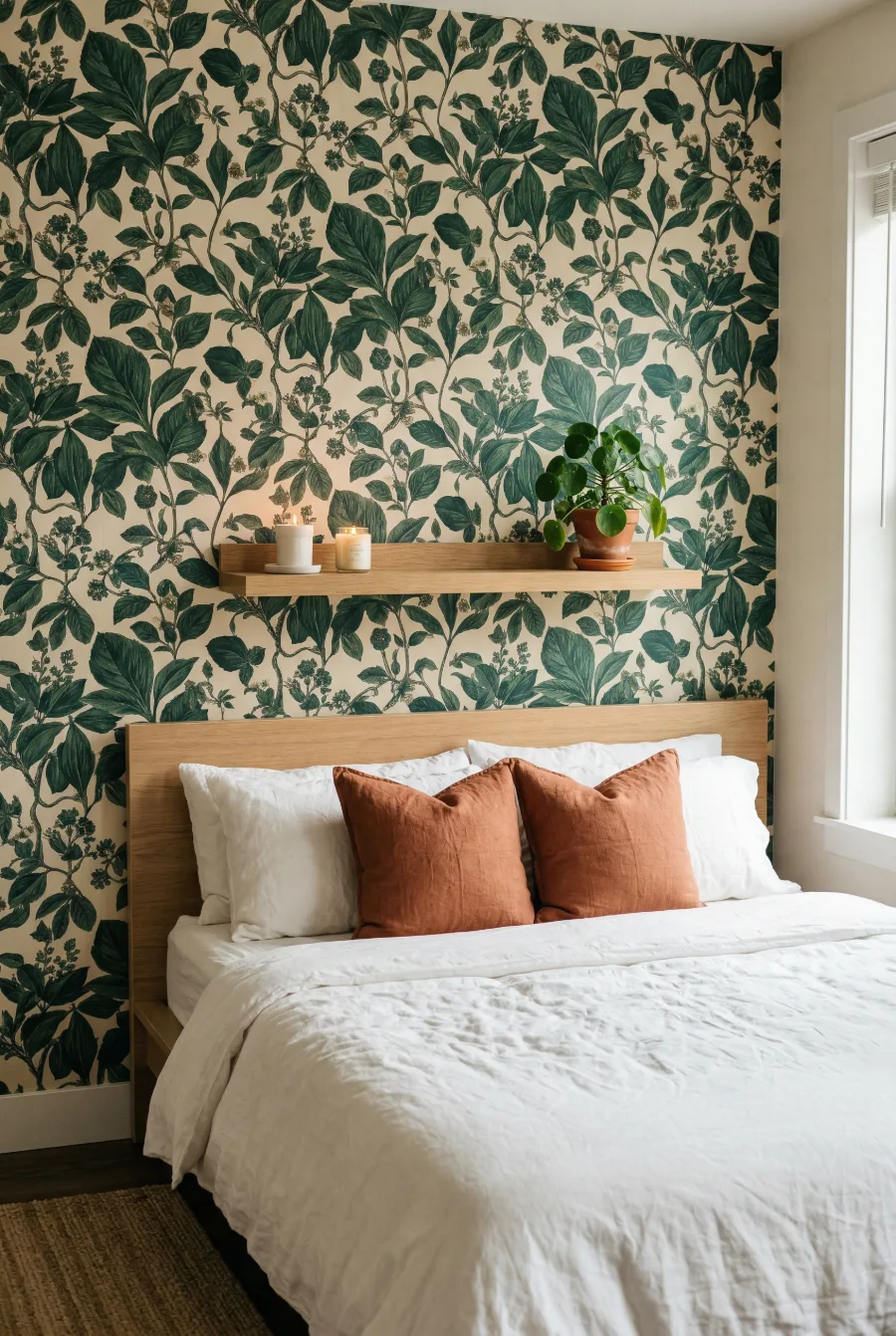
A single accent wall covered in peel and stick wallpaper is the highest-impact single change you can make to a studio apartment’s visual character. One wall covered in a botanical print, a geometric pattern, or a deep saturated color makes the apartment look completely designed — not decorated, but designed, which signals a level of deliberateness that transforms how the space is perceived. Peel and stick wallpaper applies to smooth painted walls without paste, professional tools, or permanent commitment. It comes off cleanly — without damaging the wall beneath — when you move or change your mind, which makes it ideal for renters. Application takes one to two hours for a standard bedroom or living room wall with no experience required beyond patience and a flat squeegee tool to eliminate air bubbles. The most important decision is the pattern scale relative to the wall size. In a small apartment, a large-scale botanical or abstract print often works better than a small repeat pattern — the large scale reads as more dramatic and creates more visual interest than a small pattern that can look busy. In terms of investment, a feature wall in a 10 by 8 foot room requires approximately 6 to 8 panels of standard-width peel and stick wallpaper, making it an affordable transformation relative to its impact.
LED Lighting — The Easiest Way to Change Everything About a Room for Almost Nothing
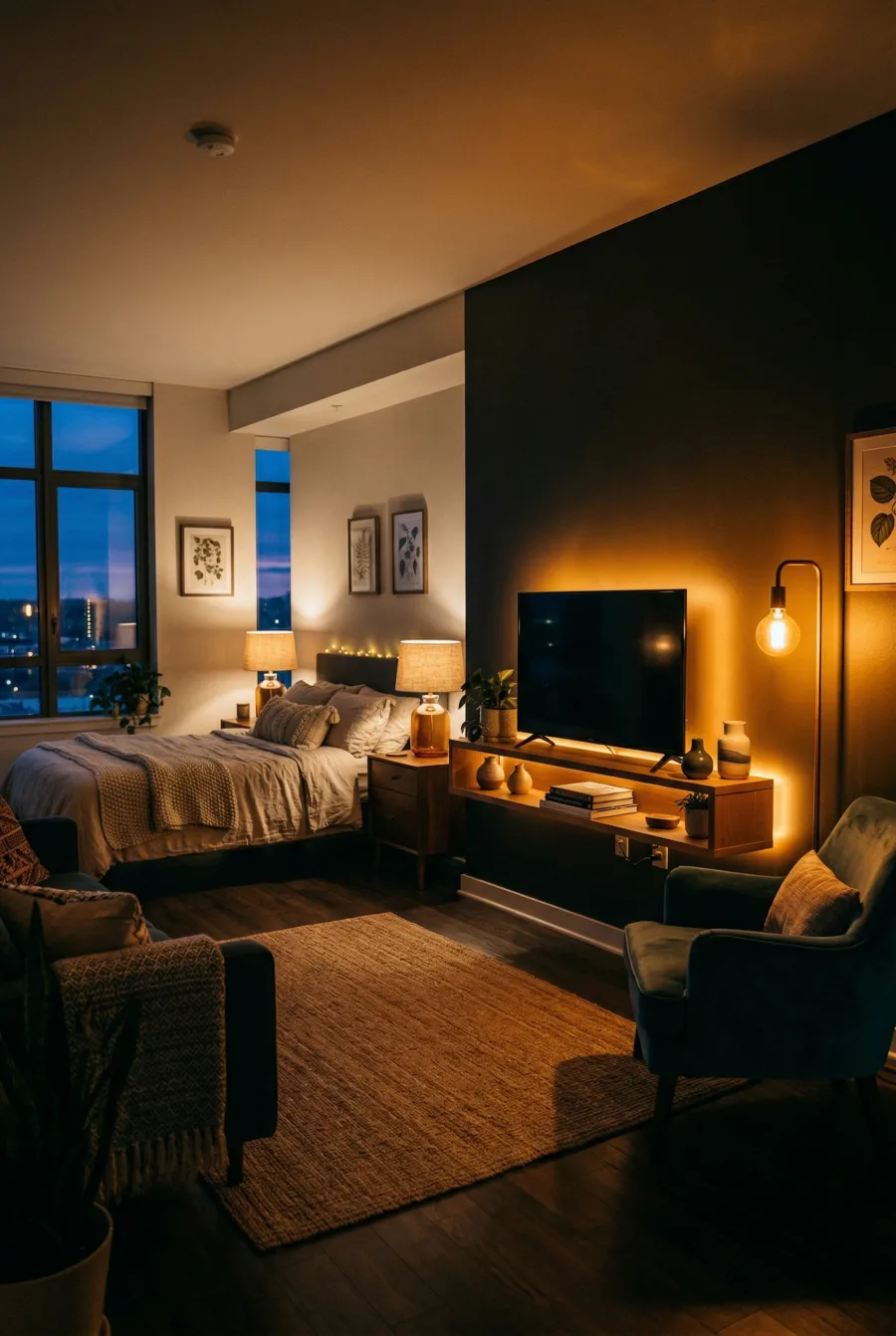
Lighting is the most underinvested area in most small apartment interiors and the one with the highest return on attention. A standard overhead ceiling light creates flat, unflattering, and completely characterless illumination that makes even beautiful furniture and thoughtful decoration look mediocre. Replacing the overhead light as the primary source and adding layered low-level lighting changes the entire feeling of the space — from institutional to intimate, from flat to dimensional, from bare to genuinely atmospheric. LED strip lights mounted behind the TV unit or behind a floating shelf create indirect ambient glow for a few dollars. Smart bulbs in existing lamps — switched to 2700K warm white — immediately create a warmer and more residential quality of light. A floor lamp in one corner and a table lamp in another create pools of warm light that give the room depth and make it feel larger by drawing the eye to specific zones rather than illuminating everything uniformly. The total investment in a complete lighting transformation — new warm bulbs in existing fixtures, one LED strip, and one affordable floor lamp — can be under $60 and the resulting difference in how the apartment feels is dramatic enough that visitors frequently comment on it. This is the single most underestimated budget apartment upgrade available.
Thrift Store Furniture Makeovers — The Patient Person’s Highest-ROI Strategy
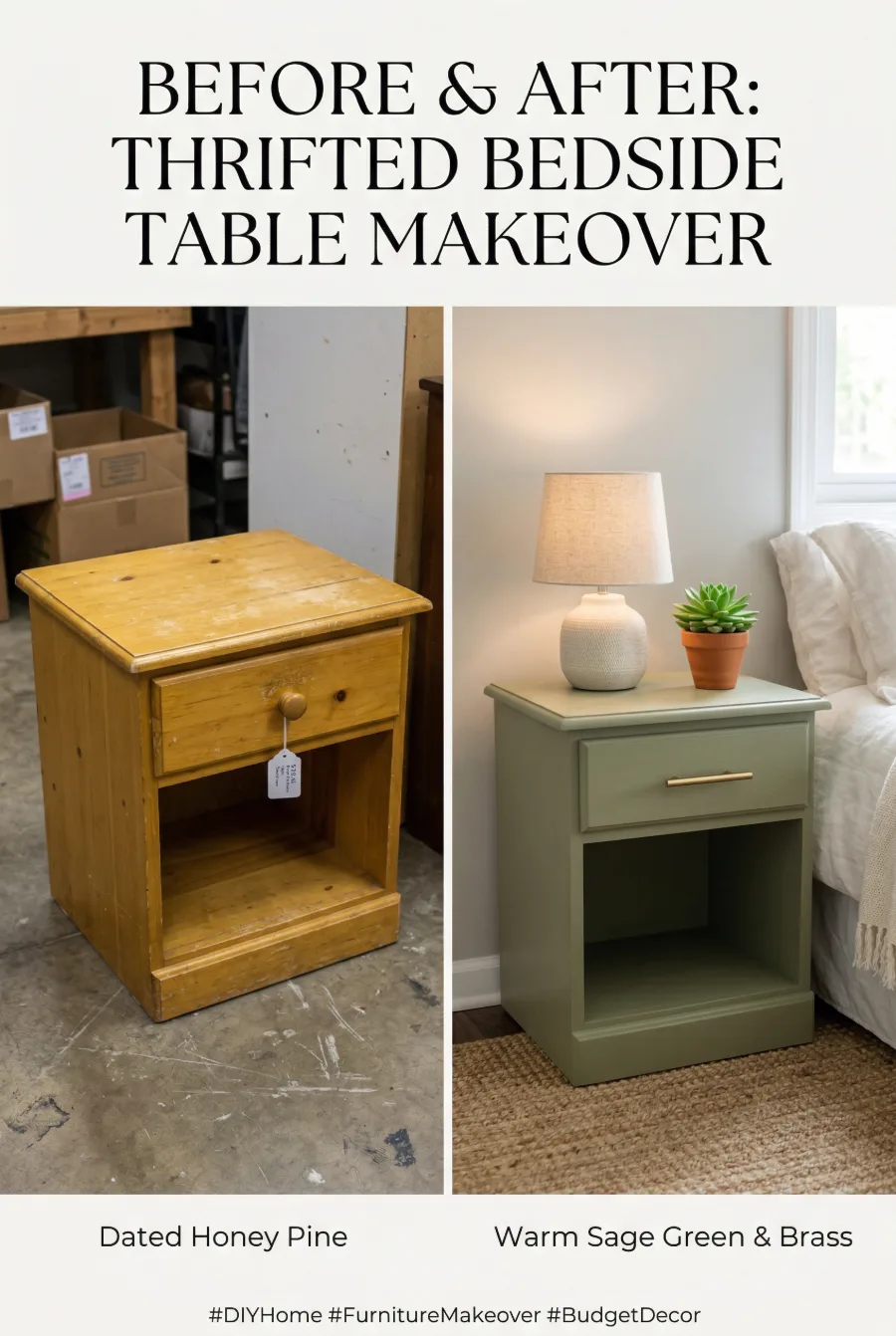
Secondhand and thrift store furniture hunting requires patience and some tolerance for imperfect finds, but the return on investment is higher than any other budget decorating strategy. Solid wood furniture — dressers, side tables, bookcases, dining chairs — built several decades ago was typically made from better materials and with more skilled joinery than contemporary budget furniture. A thrifted solid oak dresser with great bones but an outdated finish can be transformed with chalk paint, new hardware, and light sanding into a piece that looks completely contemporary and that will outlast any flat-pack equivalent by decades. The investment is the purchase price — often $15 to $80 for solid wood pieces at estate sales, thrift stores, and marketplace apps — plus the refinishing materials. Chalk paint, which adheres to most surfaces without priming and dries quickly, is the most accessible refinishing product for furniture without woodworking experience. Color choice matters significantly — warm neutral tones like sage green, warm white, and terracotta are the most universally appealing and the most photographable. Hardware replacement is the finishing step that separates a painted piece that still reads as a DIY project from one that looks genuinely custom. Budget $20 to $40 for quality replacement hardware in brass, ceramic, or matte black.
Budget Curtain Room Dividers — Separating Zones for Under $50
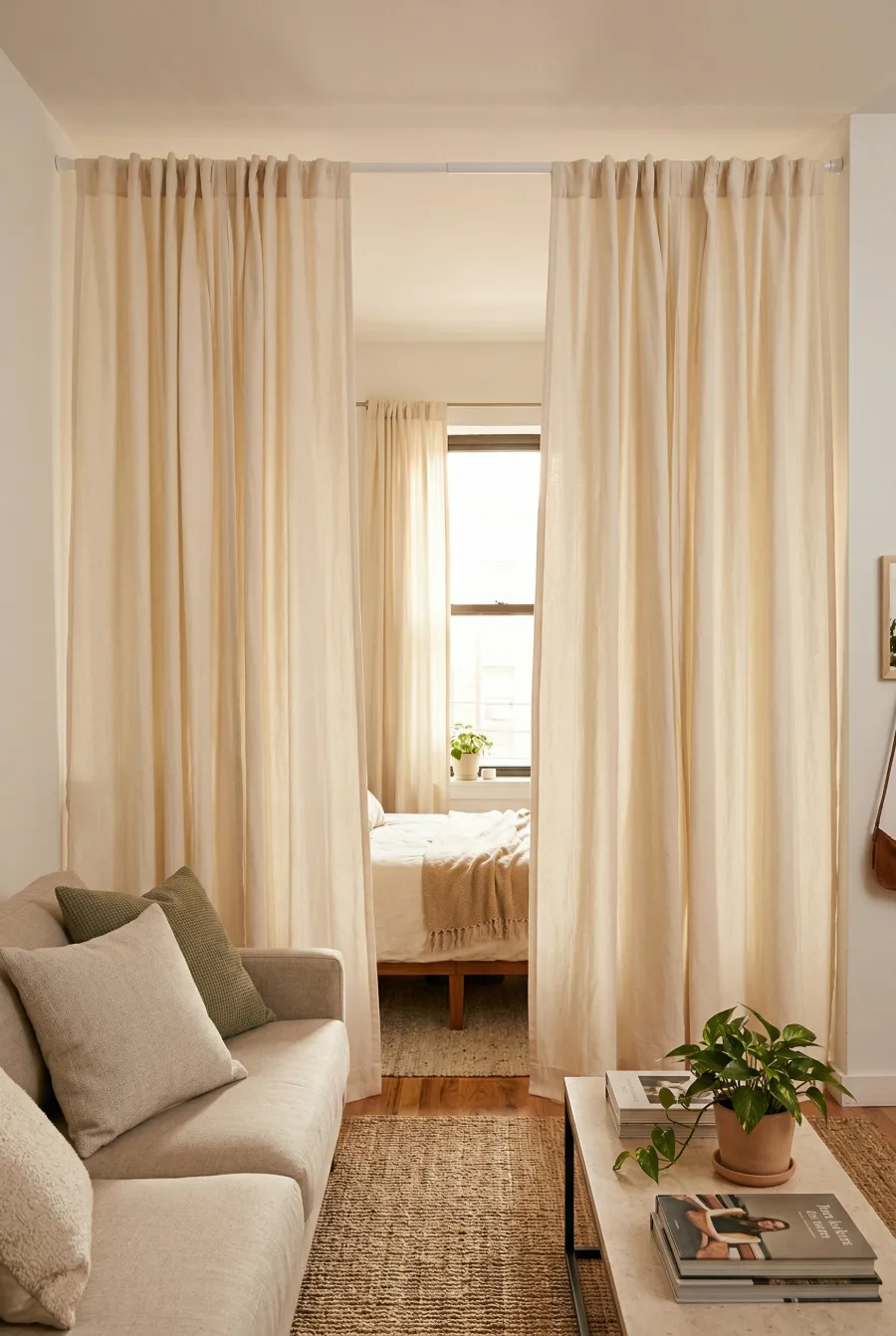
Creating a separate sleeping zone in a studio apartment is one of the highest-priority improvements for sleep quality and psychological wellbeing, and it does not require a ceiling curtain track system costing hundreds of dollars to achieve. A heavy-duty tension rod — the type rated for a wide span and significant curtain weight — pressed between two walls can support floor-to-ceiling curtain panels that create a genuinely convincing bedroom zone for under $50 including the rod and curtains. The key to making a budget curtain divider look designed rather than improvised is entirely in the fabric and length. Curtains that reach exactly from the rod to the floor — not floating a foot above it and not pooling on the ground — immediately read as intentional. Heavyweight linen or thick cotton in a warm neutral tone — ivory, oat, sage, or warm white — drapes beautifully and photographs well. Sheer or lightweight curtains flutter and sag and look exactly like what they are: a temporary fix. When fabric has appropriate weight and length, the installation method becomes invisible and the result is a bedroom zone that transforms both the function of the apartment and how you feel about spending time in it.
Low-Cost Japandi Style — The Easiest Aesthetic to Achieve on a Budget
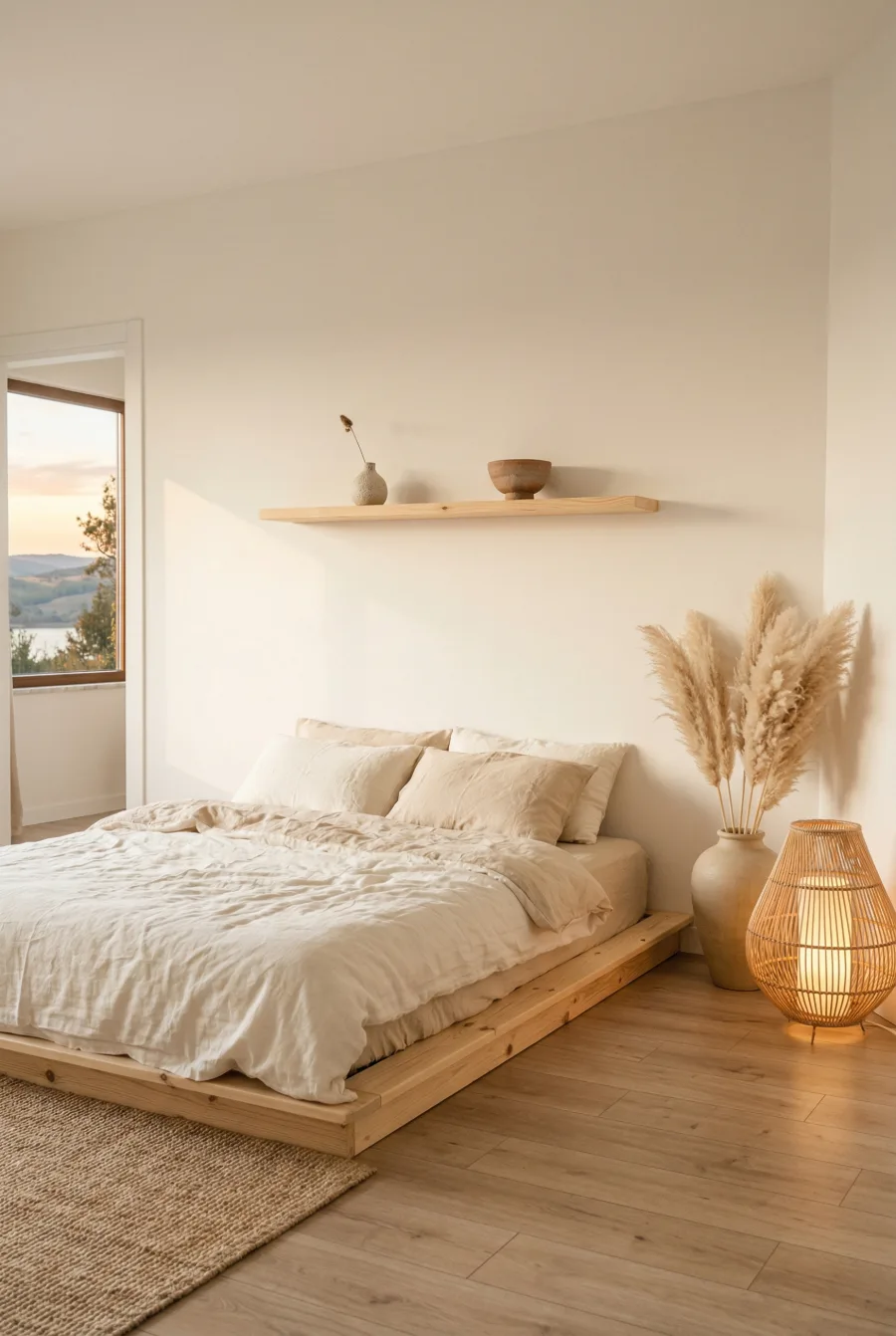
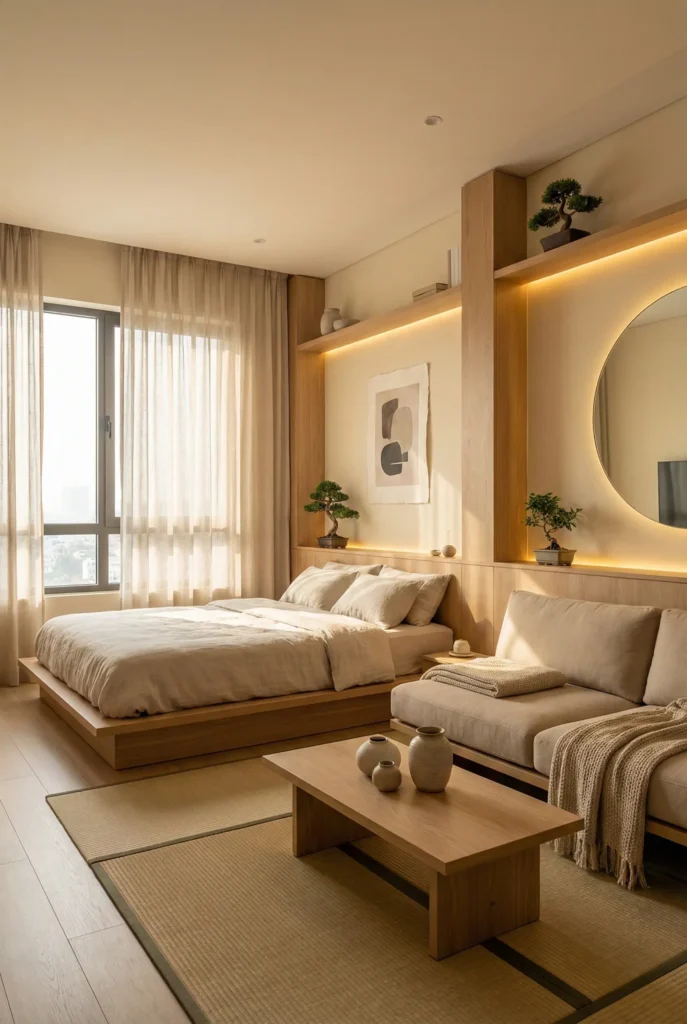
Of all the contemporary interior design styles, Japandi is uniquely suited to a limited budget because it is built on the philosophy of restraint. Japandi deliberately removes rather than adds — fewer objects, simpler furniture, natural materials, and a palette so quiet it practically disappears. This means you need to buy less to achieve the Japandi look than to achieve almost any other interior aesthetic. The key Japandi purchases for a studio apartment on a budget are: a low platform bed frame in natural pine or bamboo, a natural fiber rug in jute or sisal, one or two large ceramic vessels in neutral tones for dried botanicals, simple linen bedding in ivory or sand, and a single floor lamp in a woven rattan or bamboo shade. All of these items are available from budget-friendly retailers for modest prices individually. The palette is equally important — warm white or cream walls, natural wood tones, and no more than two accent materials throughout the space. Removing items from the space — clutter, excess furniture, decorative objects that don’t contribute to the calm — is a Japandi improvement that costs nothing. The editing process is as important as the purchasing process, which makes Japandi the most accessible high-end aesthetic for a limited budget.
Affordable Plant Styling — The Living Decor That Keeps Giving
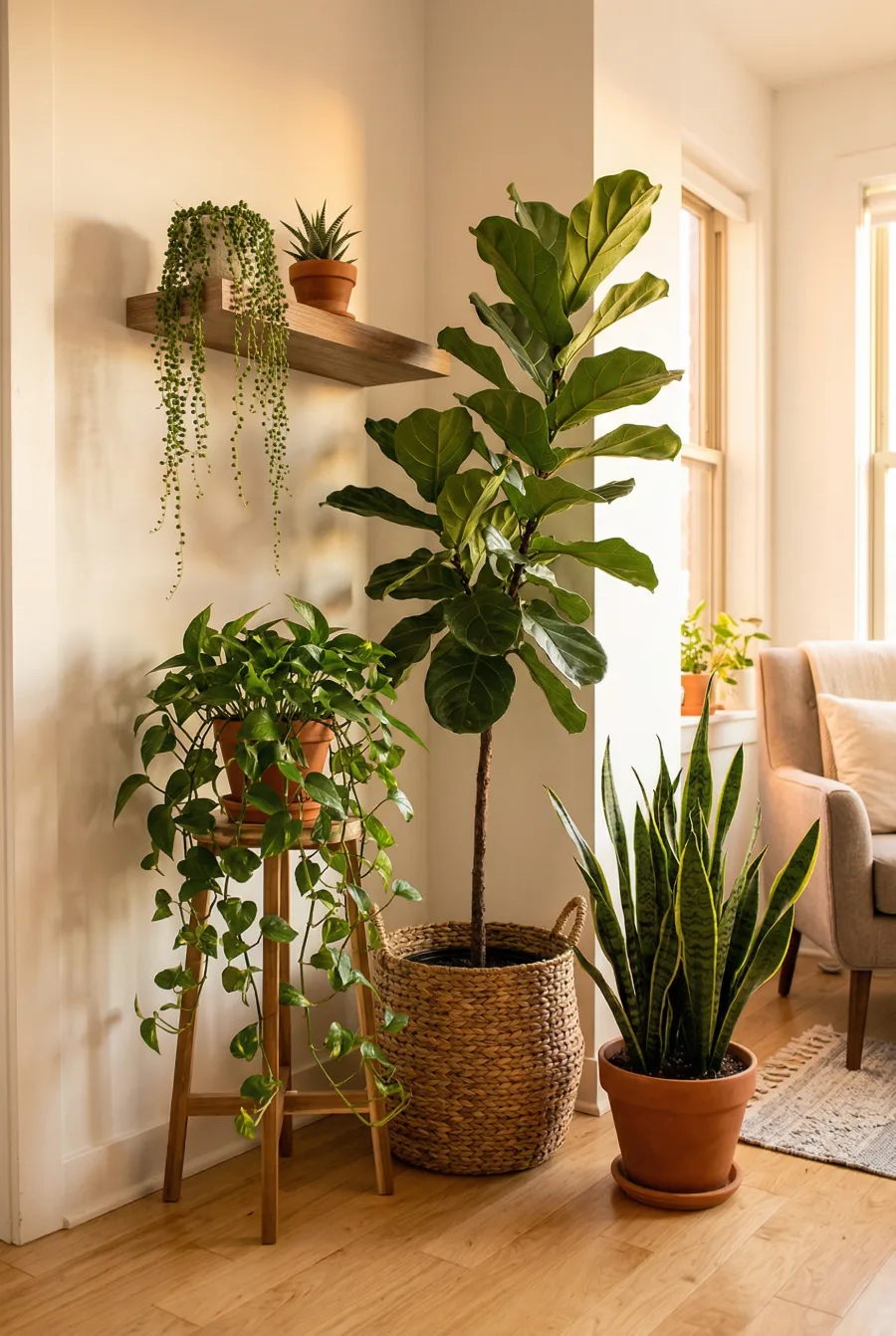
Plants are the most cost-effective decorating tool available to a studio apartment resident because a single plant purchased at a modest price generates years of visual value and continues to grow, evolve, and fill the space over time. The difference between an apartment that feels alive and one that feels sterile is often nothing more than the presence or absence of well-placed plants. The key to effective plant styling in a small apartment is grouping rather than scattering. A single plant on a shelf looks like a purchase. Three plants grouped at different heights in a corner look like a considered interior. One tall plant flanked by two medium plants in coordinated ceramic pots reads as a genuine interior design feature. For maximum impact on a limited budget, prioritize fast-growing trailing plants — pothos, heartleaf philodendron, and string of pearls — that fill shelves and cascade dramatically within months of purchase. Snake plants and ZZ plants are ideal for low-light apartments and virtually indestructible for those new to plant care. Matching planters dramatically improve the appearance of any plant collection — three plants in mismatched plastic nursery pots look like an oversight; the same three plants in matching terracotta or white ceramic pots look curated. Terracotta pots from the garden center are among the most affordable and most beautiful vessel options available.
Budget Gallery Walls — Custom Art for the Cost of a Frame
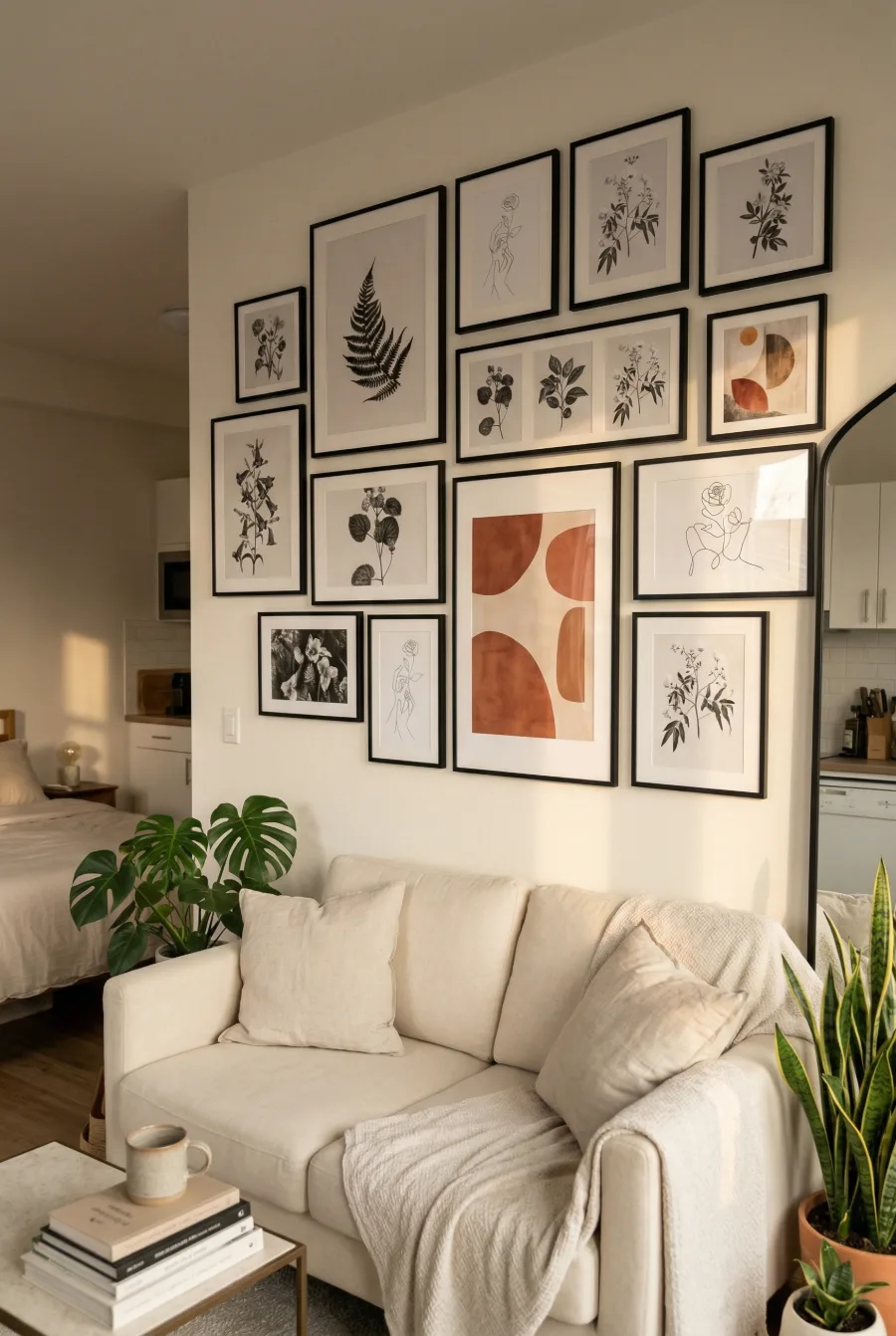
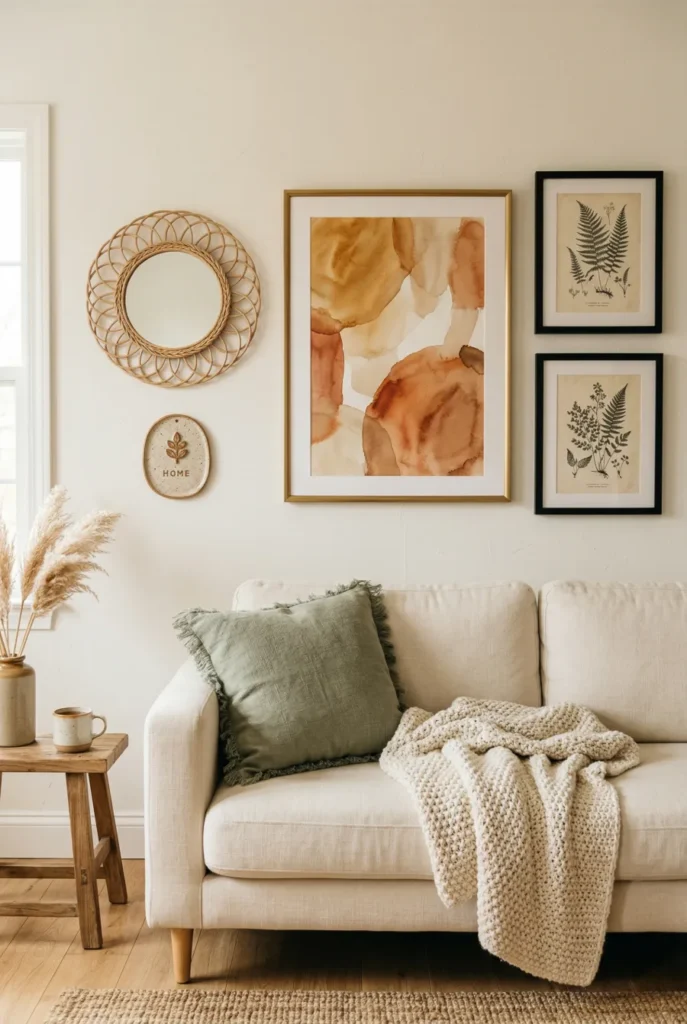
A gallery wall is one of the most reliable ways to give a studio apartment a sense of character and personal history — and it is almost entirely free if you know where to source art without buying from galleries or retail art prints. Free digital art downloads from design platforms like Unsplash and Creative Market provide an enormous selection of high-quality images that can be downloaded and printed at home or at a print shop for a dollar or two per image. Architecture and interior photography in black and white, minimal line drawings, botanical illustrations, and abstract work all print beautifully and look expensive in the right frame. The frame is where the investment goes — and cohesion among frames is what makes a gallery wall look curated rather than assembled from different sources. A set of matching thin-profile frames in matte black or natural wood purchased in a bundle creates the visual unity that transforms a collection of prints into a gallery. For arrangement, print paper templates of each frame at scale, cut them out, and tape them to the wall with painter’s tape to test the arrangement before committing to holes. An asymmetric arrangement that has one or two larger frames anchoring the composition and smaller frames grouped around them looks more dynamic than a rigid grid. A gallery wall styled this way costs the price of frames and printing — typically $40 to $120 for a complete twelve-frame arrangement — and creates a feature wall that is the first thing anyone notices when they enter the apartment.
Budget Kitchen Refresh — Big Change for Under $100
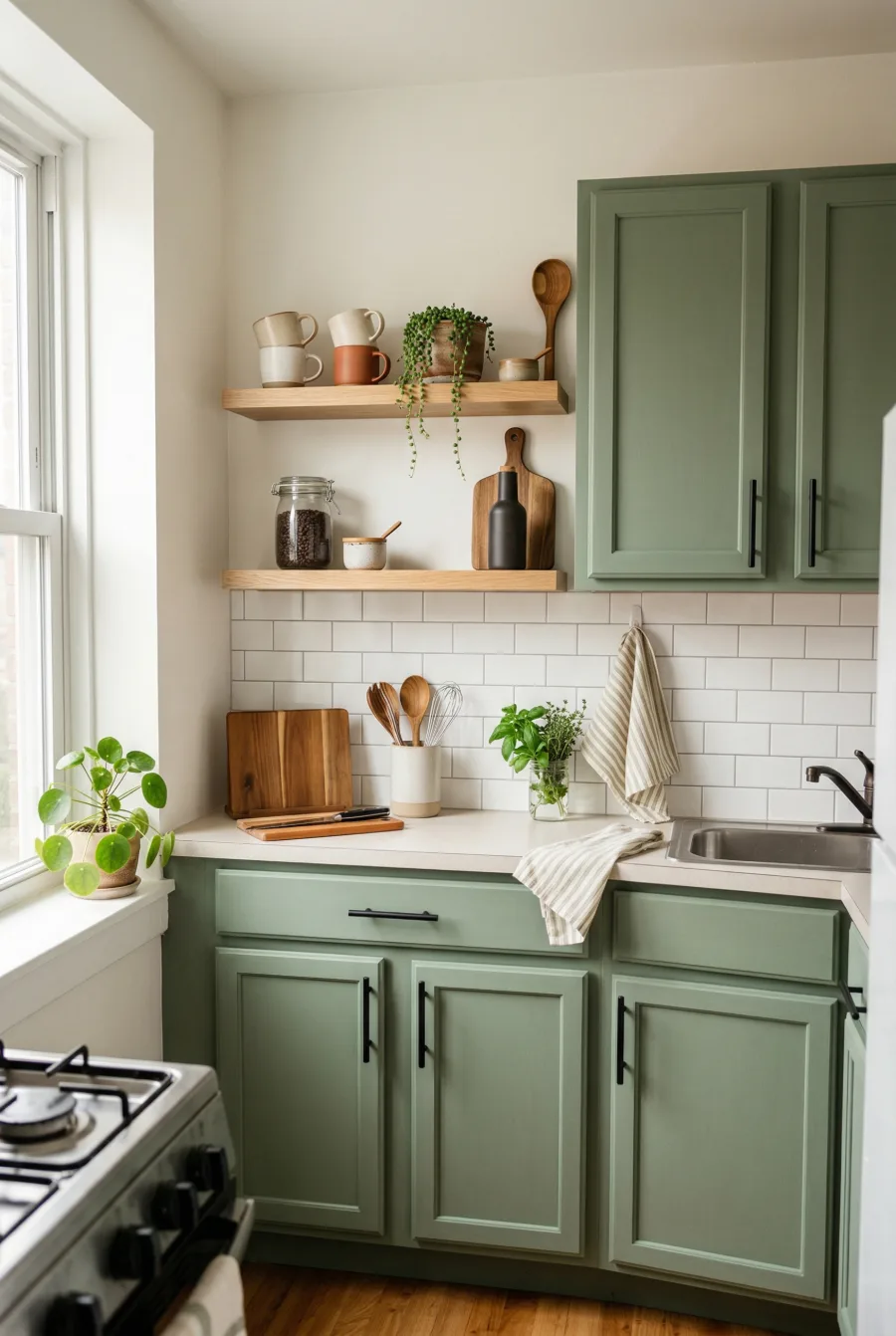
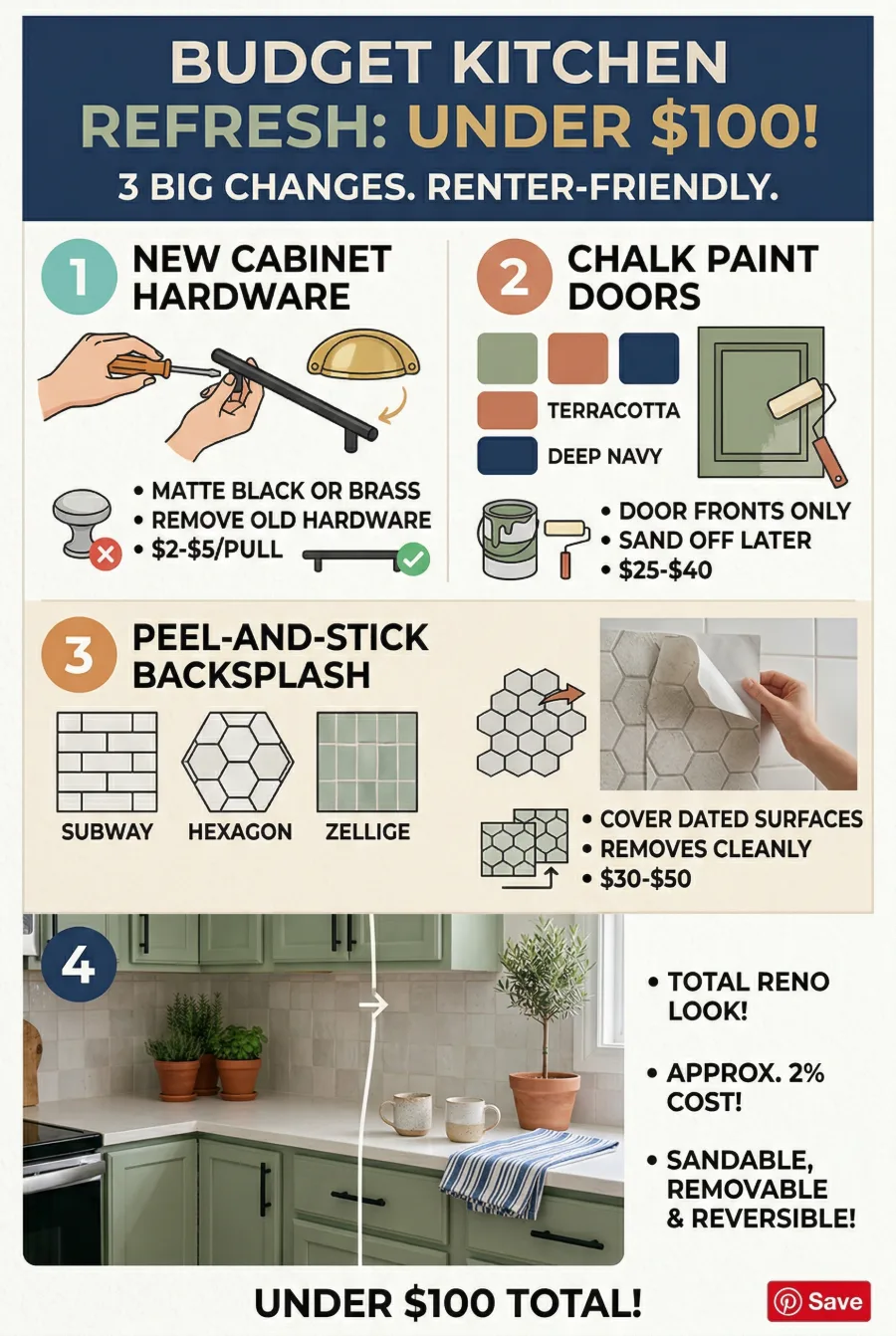
A complete kitchen renovation is thousands of dollars. A budget kitchen refresh that creates the impression of a renovation is under $100 if you prioritize the right changes. The single most impactful affordable kitchen change is cabinet hardware replacement — removing the original handles and knobs and replacing them with a cohesive set of matte black bar pulls or brass cup pulls costs approximately $2 to $5 per handle and immediately transforms the cabinets from generic to considered. The second most impactful change is chalk painting the cabinet door faces — chalk paint in a warm sage green, terracotta, or deep navy applied to the door fronts only (not the cabinet boxes) changes the entire character of the kitchen for a cost of $25 to $40 for the paint. Peel-and-stick backsplash tile — available in subway, hexagon, and zellige-inspired patterns — is the third major upgrade and covers an awkward or dated backsplash surface for $30 to $50. Combined, these three changes — new hardware, painted cabinet doors, and a fresh backsplash — create the visual impression of a renovated kitchen at approximately 2% of the cost of an actual renovation. The changes are reversible for renters: chalk paint sands off, peel-and-stick tile removes cleanly, and hardware replacement requires only a screwdriver.
Affordable Storage Solutions Under $100 — Solve Your Biggest Problems First
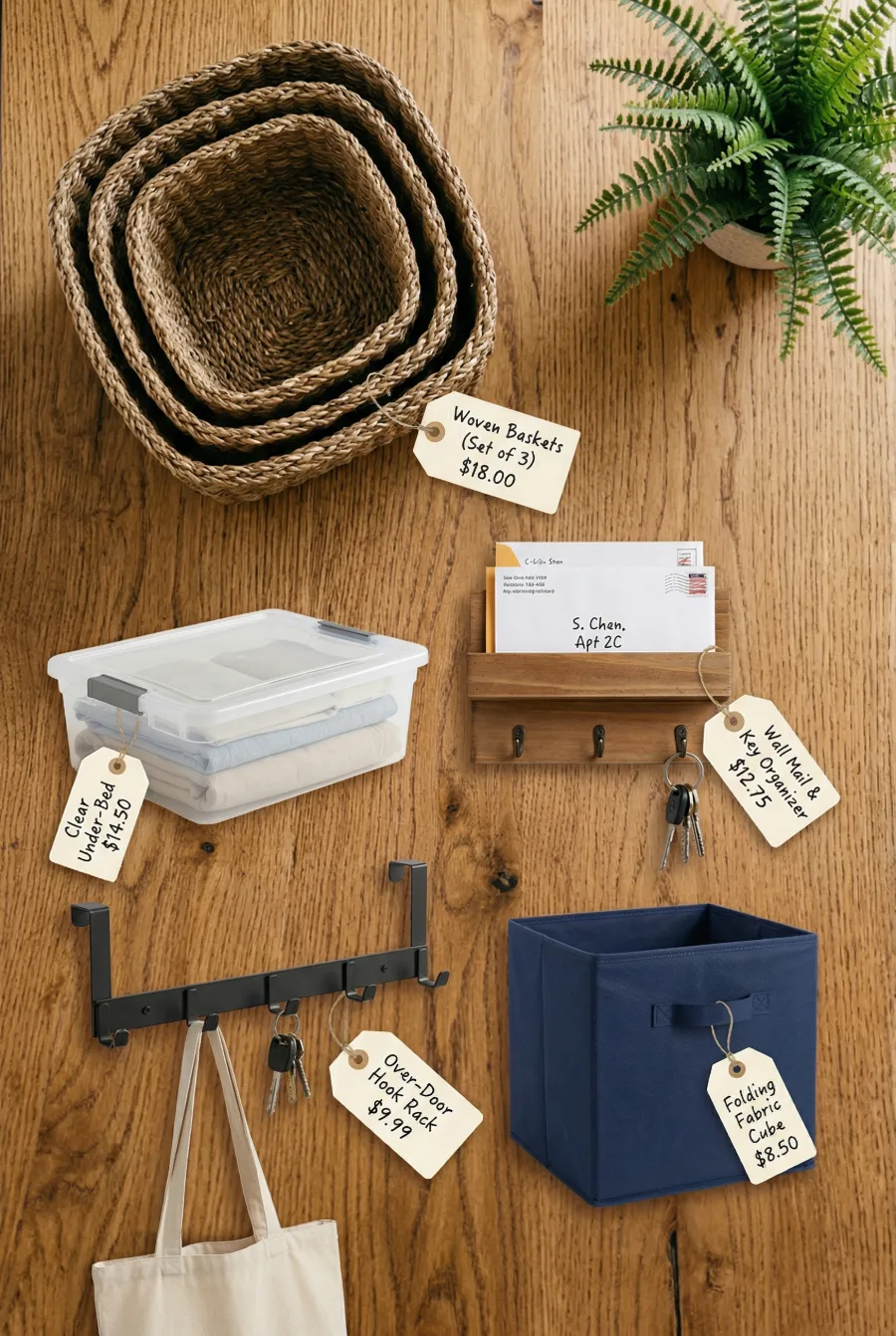
Before spending on decor, addressing the storage problems that cause daily friction in a studio apartment creates a foundation that makes every subsequent decorating investment look better. Clutter and poor storage undermine even genuinely beautiful decoration — a thoughtfully styled shelf covered in unrelated items looks chaotic, and an elegantly furnished living room with storage spilling out of every visible space looks overwhelmed. The highest-priority budget storage investments for a studio apartment are: under-bed storage bins with lids for seasonal items and extra bedding, a set of woven seagrass or fabric storage baskets for visible shelf storage, an over-door hook rack for bags and coats in the entryway, and a small wall-mounted key and mail organizer near the front door. These four categories of purchase can be completed for well under $100 combined and solve the most common sources of visual clutter in a studio apartment. Once storage is organized and everything has a specific home, the decorating work you do on top of it stays visible rather than disappearing into a background of clutter. The sequencing matters — storage organization before decoration ensures that the decoration has an environment in which it can actually be seen.
DIY Storage Ottoman — Custom Upholstery for $30
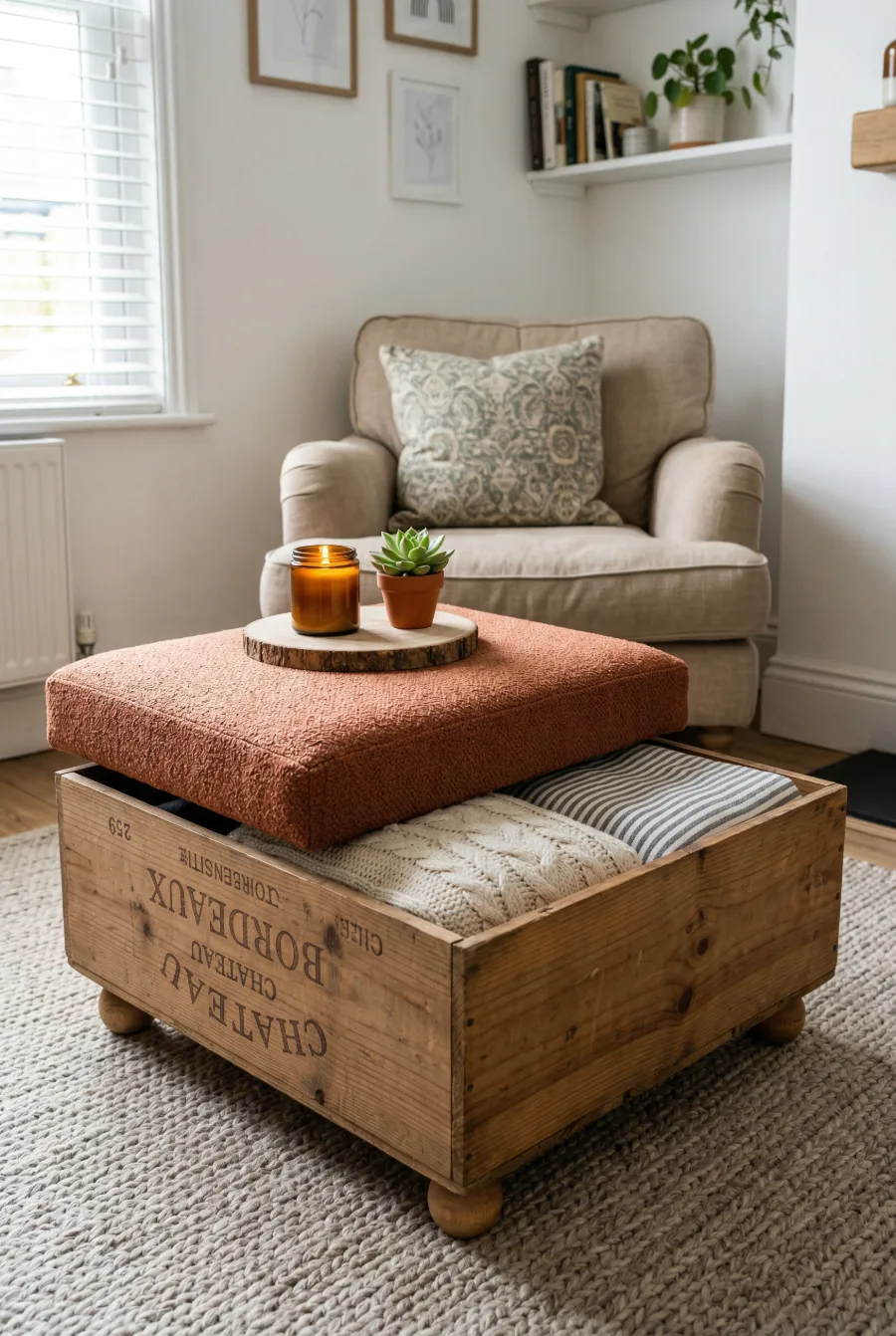
A storage ottoman from a furniture retailer costs $80 to $300 depending on the quality. A DIY storage ottoman made from a wooden wine crate or a plywood box costs $20 to $40 and results in a piece that is genuinely custom — sized exactly to your specification, upholstered in exactly the fabric you want, and finished to the exact height that works in your specific living room. The construction is straightforward: a wooden crate or plywood box forms the base and storage interior. A piece of high-density foam cut to the lid dimensions creates the cushion. A yard of your chosen upholstery fabric — bouclé, velvet, or performance linen — wraps the foam and is stapled to the underside of the lid. Four screw-in wooden feet in a finish that matches your space elevate the ottoman from the floor and give it a refined furniture feel. The lid can be hinged to the base for easy storage access or left as a lift-off. The result is an ottoman that looks identical to retail versions at a fraction of the cost and carries the added value of being exactly what you wanted rather than a compromise with whatever was in stock. The skill requirement is minimal — a staple gun, a utility knife, and a screwdriver are the only tools needed.
Budget Home Office Desk Setup — Professional-Looking on Any Video Call
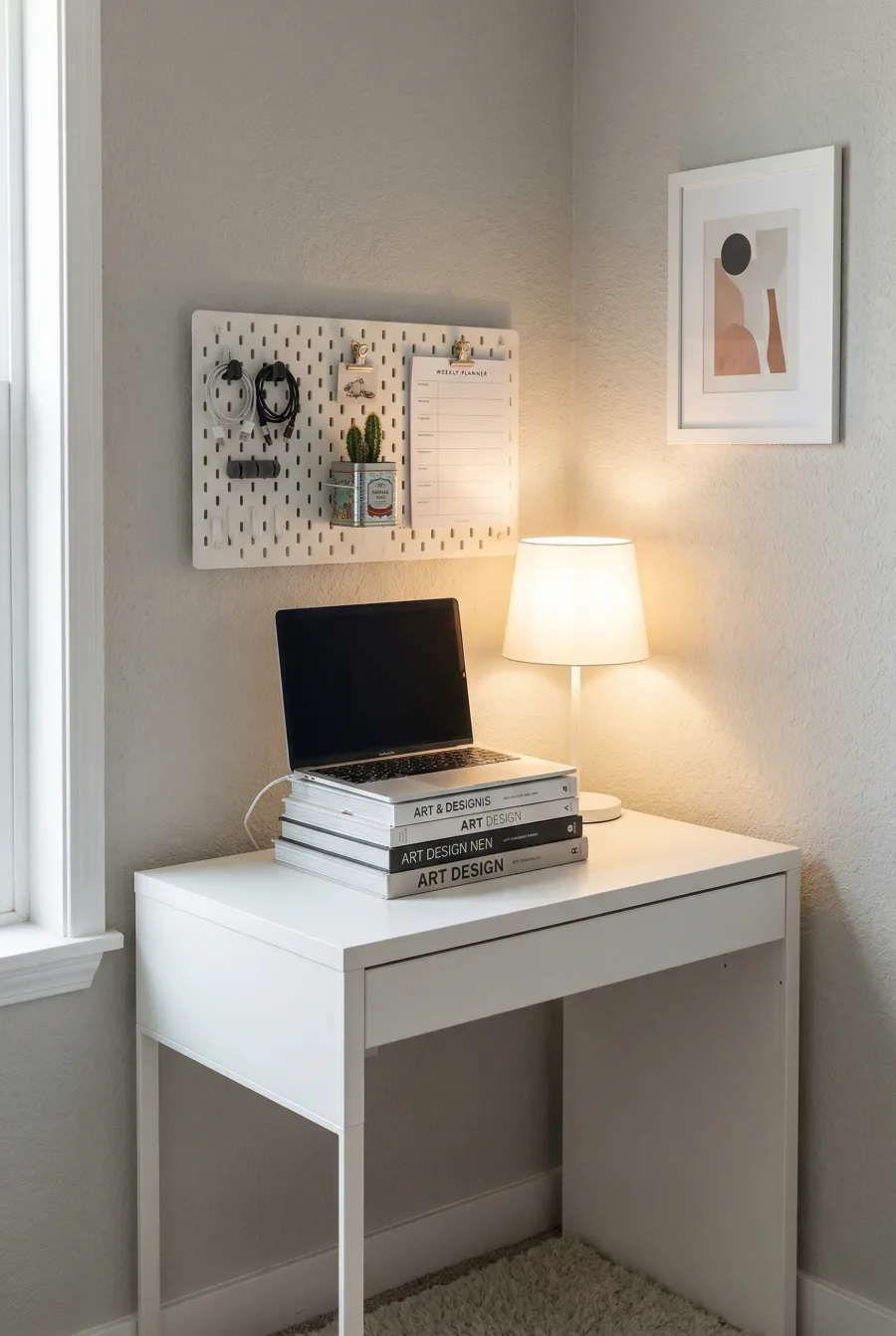
A functional and attractive home office setup in a studio apartment does not require an expensive standing desk, a premium monitor arm, or designer accessories. It requires intentionality and prioritization of the details that are visible on video calls and that affect daily working comfort. The desk itself can be any flat stable surface at the right ergonomic height — a secondhand desk from a thrift store sanded and stained is often superior in quality to a new flat-pack option at the same price point. The monitor riser is the highest-impact affordable upgrade: a stack of matching coffee table books or design books raises a laptop screen to eye level, eliminating the posture-damaging forward lean that flat laptop use creates. A good desk lamp with a warm but adequately bright light source is the second priority — the lighting directly affects how you look on video calls and how comfortable sustained screen work feels. A small plant in a ceramic pot, one framed print, and a clean surface surrounding the actual work tools complete the setup. The pegboard approach — a small pegboard above the desk with hooks for headphones, a small shelf for a plant, and clips for notes — provides organization and background interest on calls without requiring expensive desk accessories.
Affordable Rug Styling — Anchor Your Zones and Tie the Room Together
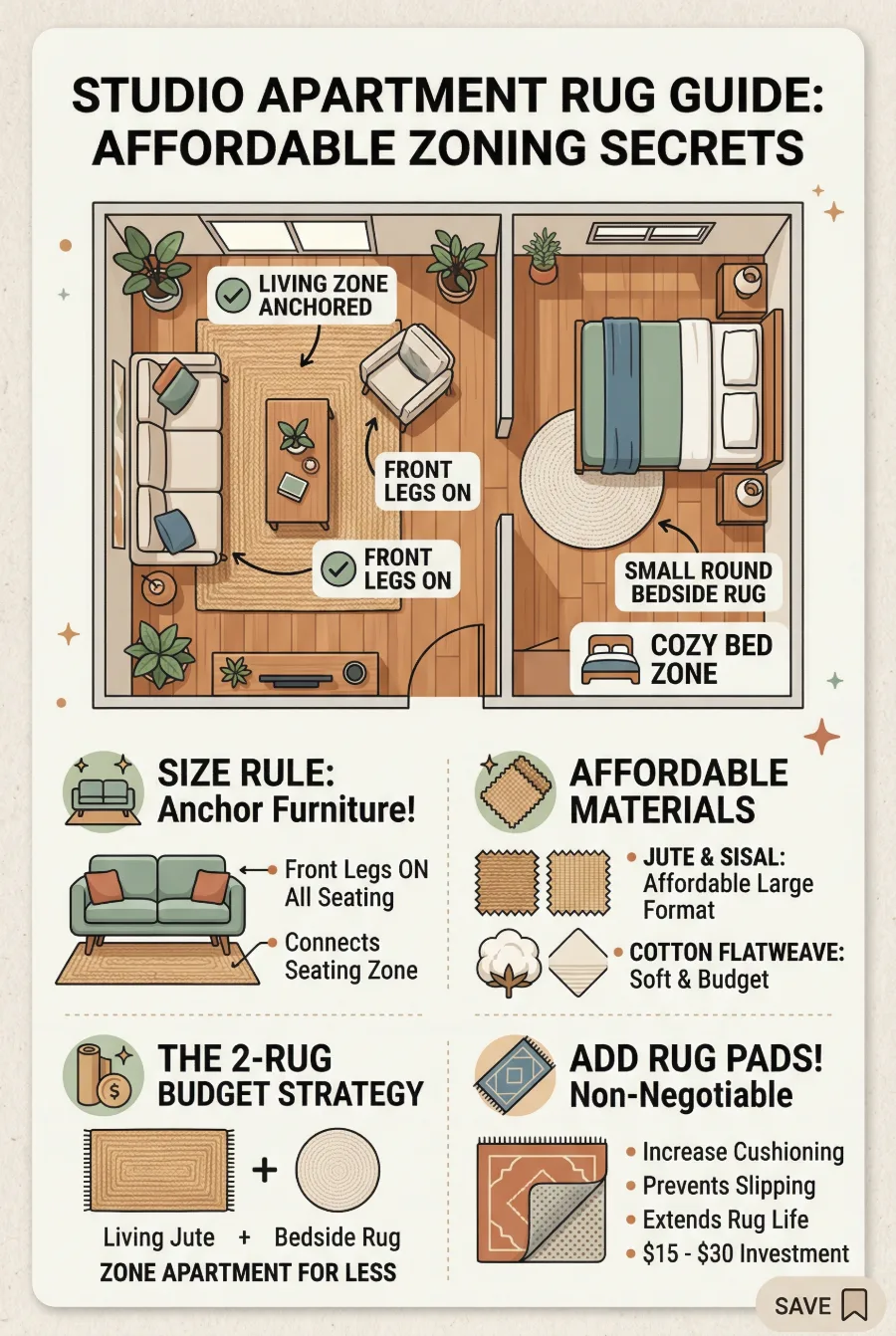
A rug is the single piece of soft furnishing that has the most structural impact on a studio apartment’s floor plan, and finding a quality rug at an affordable price is entirely possible with the right knowledge of what to look for and where to look. The size of the rug is the most critical decision — in a living area, the rug should be large enough that the front legs of all seating furniture sit on it, anchoring the furniture arrangement together as one zone. A rug that is too small — with all furniture legs off the rug — creates a disconnected and awkward arrangement that undermines the entire room. Jute and sisal rugs in natural tones are the most affordable large-format options and photograph beautifully in virtually any interior style. Cotton flatweave rugs are similarly affordable and provide a softer surface underfoot than natural fiber. The most budget-conscious approach for a studio apartment with both living and sleeping zones is a large jute rug in the living area and a smaller round cotton or wool rug beside the bed — two rugs that together zone the apartment for less than the price of one oversized premium rug. Rug pads are a non-negotiable addition under any rug on a hard floor — they prevent slipping, increase cushioning, and extend rug life significantly. A quality rug pad adds $15 to $30 to the total cost and is one of the best investments in the rug purchase.
Budget Bathroom Refresh — Spa Atmosphere for Under $80
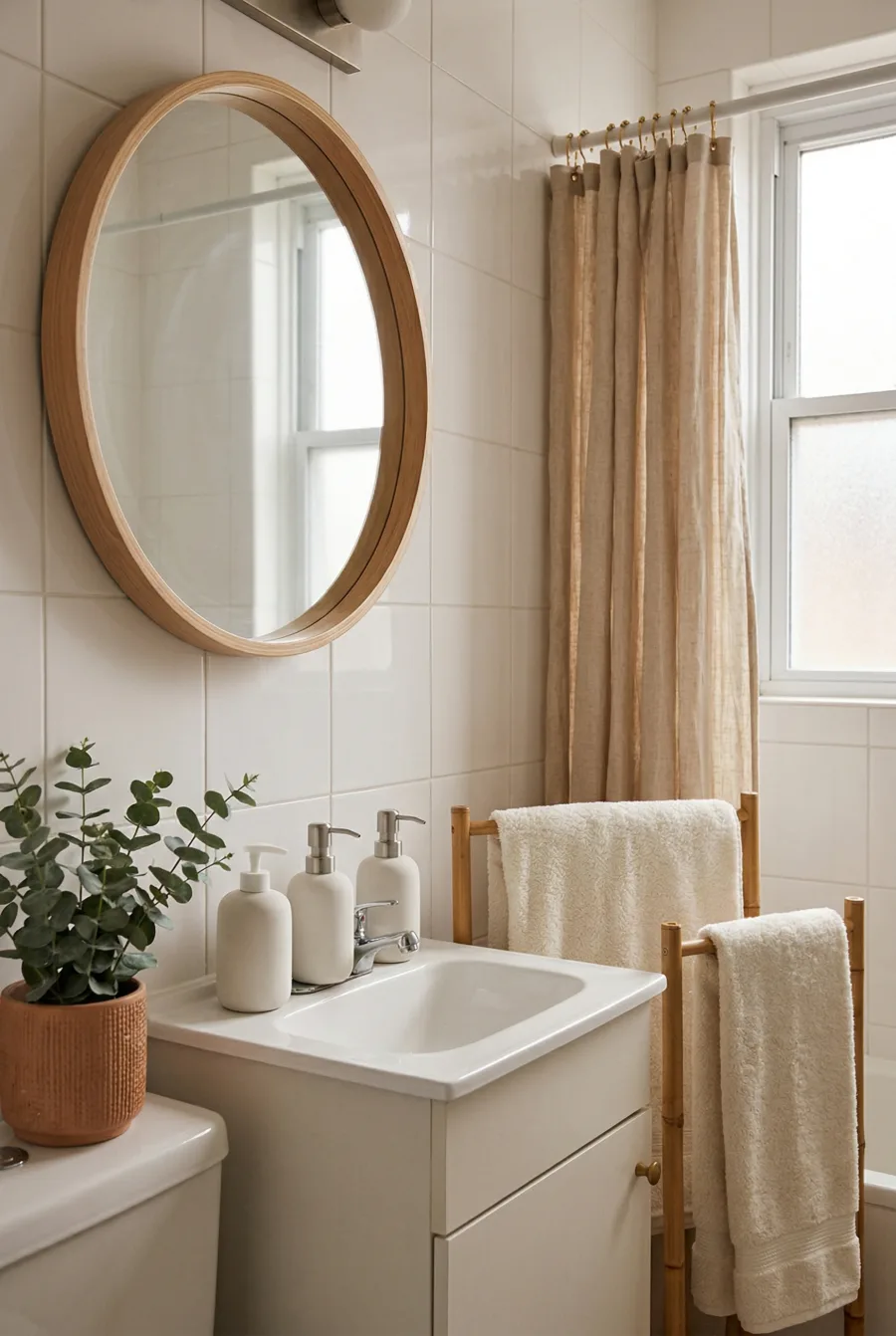
A small apartment bathroom is one of the easiest rooms to transform on a minimal budget because the changes that matter most are affordable and don’t require any construction. The most impactful affordable bathroom upgrade is replacing the original soap dispenser with a quality refillable pump bottle in a ceramic, glass, or stainless finish — the difference between a commercial plastic soap bottle and a matte white ceramic pump dispenser on a clean counter is significant and costs under $15. A new shower curtain in a heavy linen or cotton fabric — in a warm neutral or a soft color — immediately changes the character of the bathroom more than almost any other single element. Matching towels displayed on a bamboo towel rack rather than stored in a cabinet creates the visual of a considered bathroom immediately. One small plant — a pothos trailing from a high shelf, a small succulent on the windowsill, or a hanging air plant — brings the organic element that transforms bathroom spaces from functional to welcoming. A round adhesive mirror with a wooden or brass frame added above the sink updates the standard builder-grade mirror without replacing it. These five changes — soap dispenser, shower curtain, matching towels, one plant, and a decorative mirror frame — can be completed for under $80 and create a bathroom that feels genuinely spa-like.
Budget Balcony Makeover — An Outdoor Room for Under $200
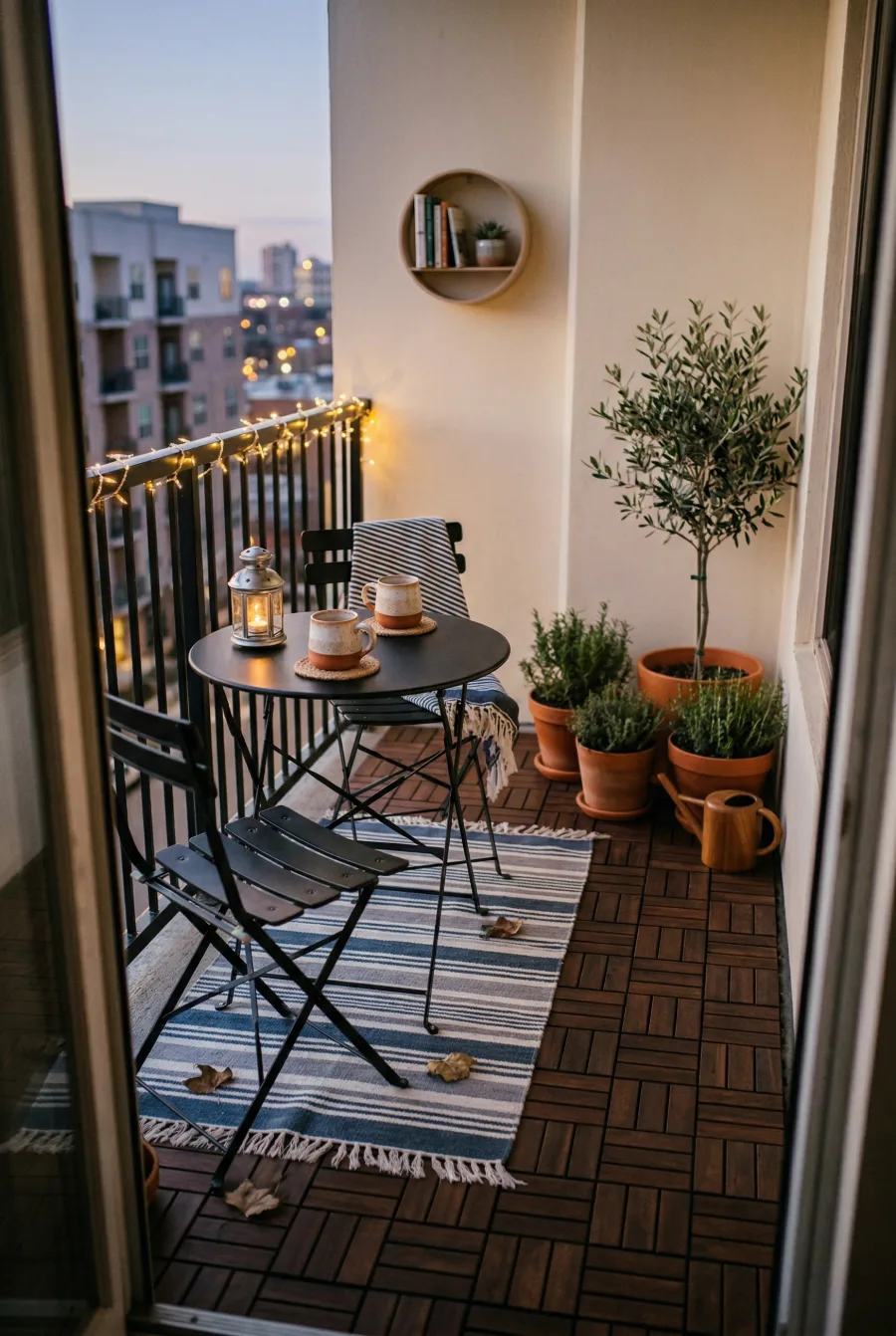
A small apartment balcony left in its original state — bare concrete slab with metal railing — is an asset that most residents never fully use. With a targeted budget of under $200, the same balcony can become a genuine outdoor living room that dramatically extends the usable space of the apartment and becomes one of the most-used spots in the home. The foundation is interlocking deck tiles — wood-look or stone-look panels that click together over the concrete slab without adhesive or tools. A 6 by 8 foot balcony can be covered for $40 to $80 depending on the tile material. A small bistro table with two foldable chairs creates a dining spot for two on any balcony with room for the footprint of a single kitchen chair. String fairy lights strung along the railing or overhead create evening ambience that transforms the balcony from a storage area into a destination at dusk. Three terracotta pots with herbs — rosemary, lavender, basil — provide greenery, fragrance, and fresh cooking ingredients. A small outdoor rug defines the seating area and adds visual warmth. The entire investment — tiles, bistro set, lights, pots, and rug — can be under $200 and the return in daily quality of life is substantial, particularly in warmer months when the balcony becomes an extension of the living room.
Secondhand and Vintage Decor — The Sustainable Approach to an Expensive-Looking Home
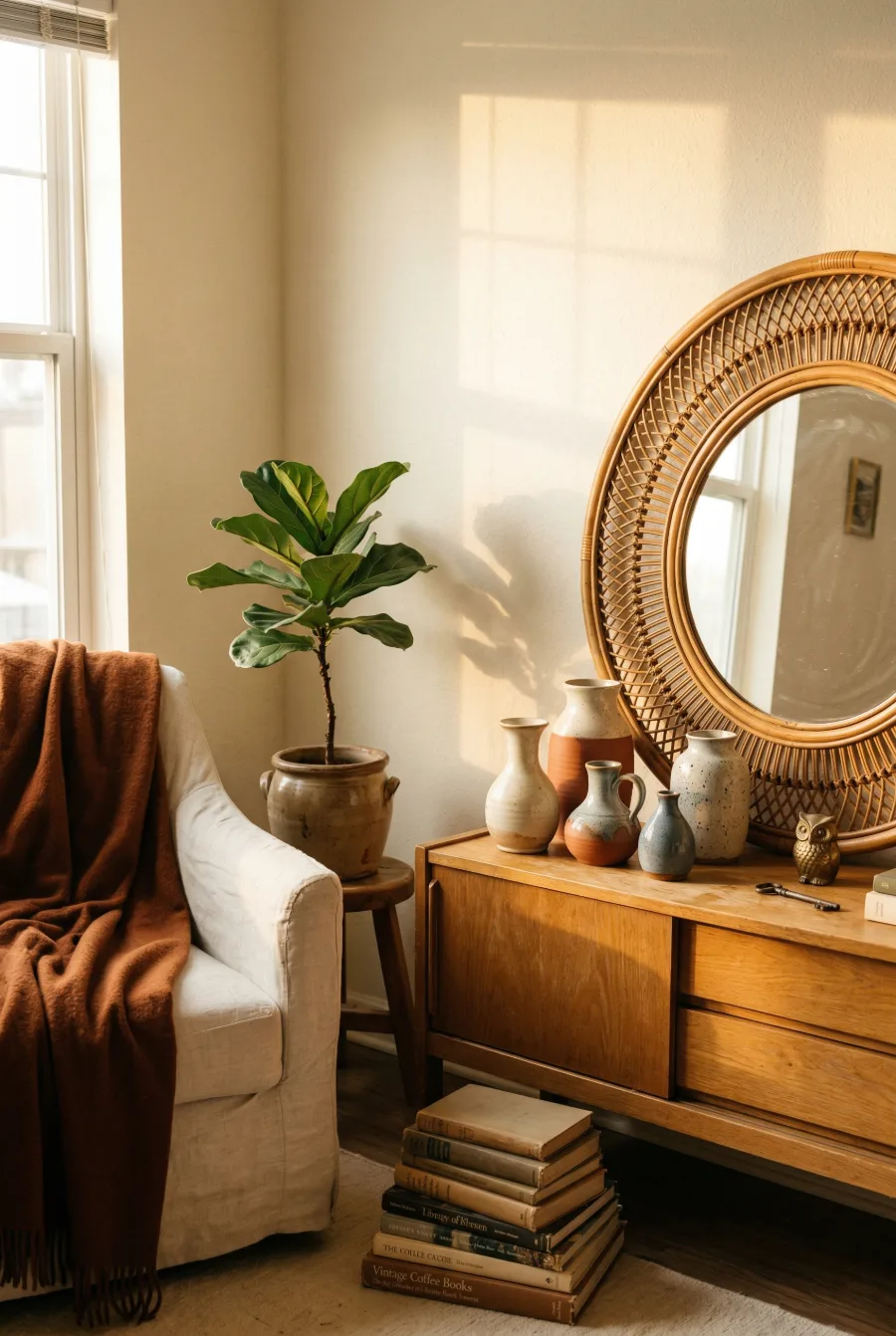
The most characterful and expensive-feeling studio apartments are almost never entirely new. They are the interiors of people who know how to mix one or two investment pieces with a larger collection of secondhand, vintage, and thrifted finds that carry the visual weight and history that new mass-produced items can never replicate. A vintage rattan mirror found at an estate sale. A set of ceramic vessels from a thrift store that happen to be beautiful. A preloved wool rug with a subtle geometric pattern that adds pattern and texture to the floor. An old wooden side table with beautiful proportions that only needed cleaning and new hardware. These items, styled alongside clean contemporary pieces from affordable retailers, create the kind of interior that looks curated and intentional because it has actually been curated over time rather than purchased in one shopping session. The practical guide to secondhand decorating is to focus on items with good bones and natural materials. Solid wood pieces are always worth refinishing. Quality ceramics and glassware from thrift stores are often identical to expensive contemporary equivalents. Lamps with great silhouettes can have outdated shades replaced for $15. Frames from thrift stores in mismatched sizes can be painted in the same color to create a gallery wall that looks purchased as a set.
Budget Studio Bedroom Makeover — Creating a Sleeping Sanctuary That Costs Almost Nothing
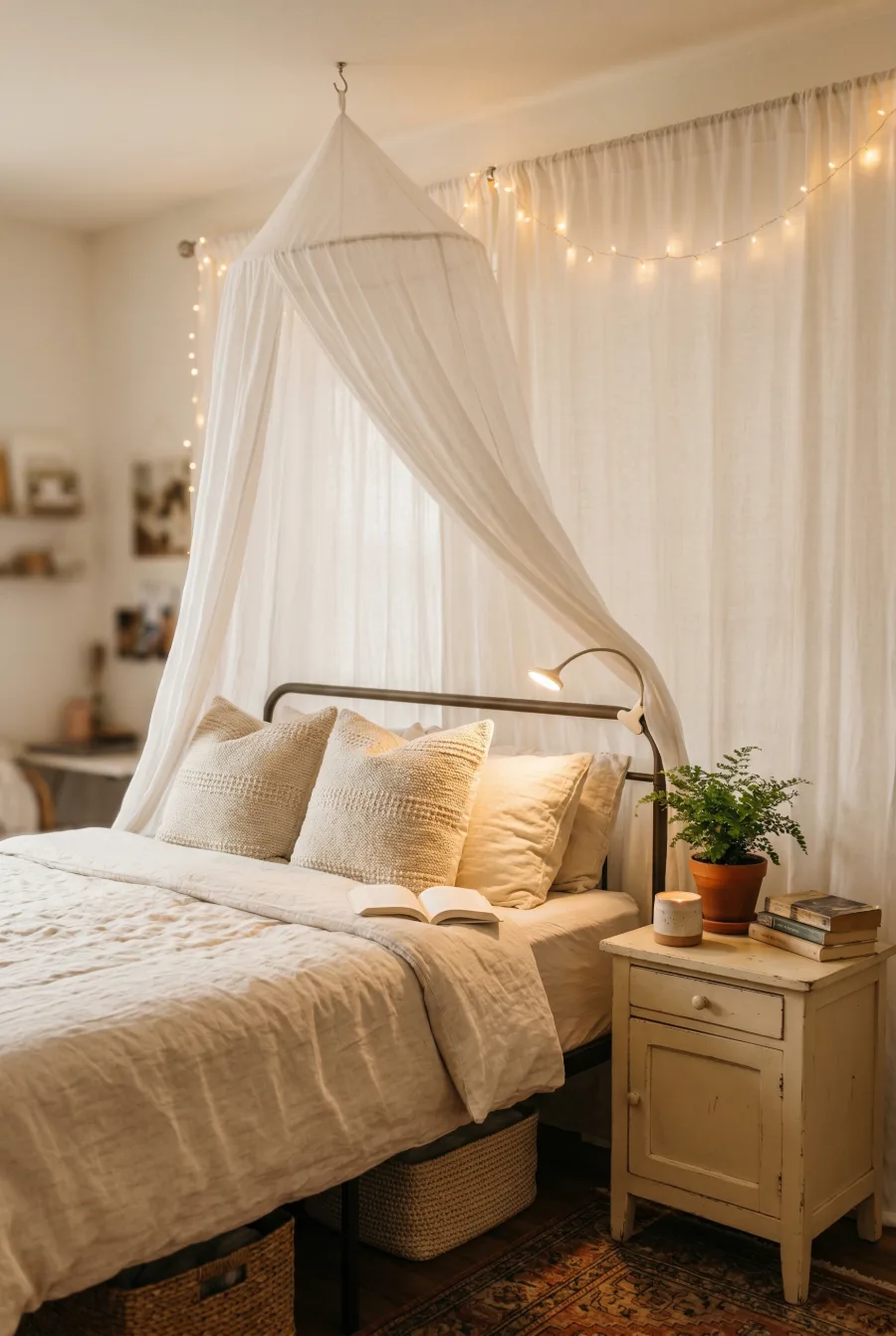
The sleeping zone of a studio apartment is the area that most directly affects wellbeing, sleep quality, and how rested and prepared for the day you feel — and it is often the area that receives the least investment because it is not the first thing visitors see. This is a mistake worth correcting. A cozy, considered bedroom zone in a studio apartment changes the entire experience of living there, particularly in the mornings when how you start the day is set by the first environment you encounter. The most impactful affordable bedroom upgrades, in order of impact, are: new bedding in a quality cotton or linen fabric in a warm neutral tone — the bed is the largest visual element in the sleeping zone and what covers it matters more than anything else; a warm bedside lamp rather than overhead lighting as the primary light source in the sleeping area; a small floating shelf above the bed holding a plant, a candle, and one meaningful object; and a curtain canopy or simple gathered fabric above the headboard wall that creates the sense of a defined sleeping niche. Together, these changes can be accomplished for under $100 and create the kind of bedroom zone that makes the rest of the studio apartment feel different — more like a home with distinct spaces than a single room that serves too many purposes at once. The bedroom is the last thing you experience before you sleep and the first thing you experience when you wake. It deserves care, even on a budget.